

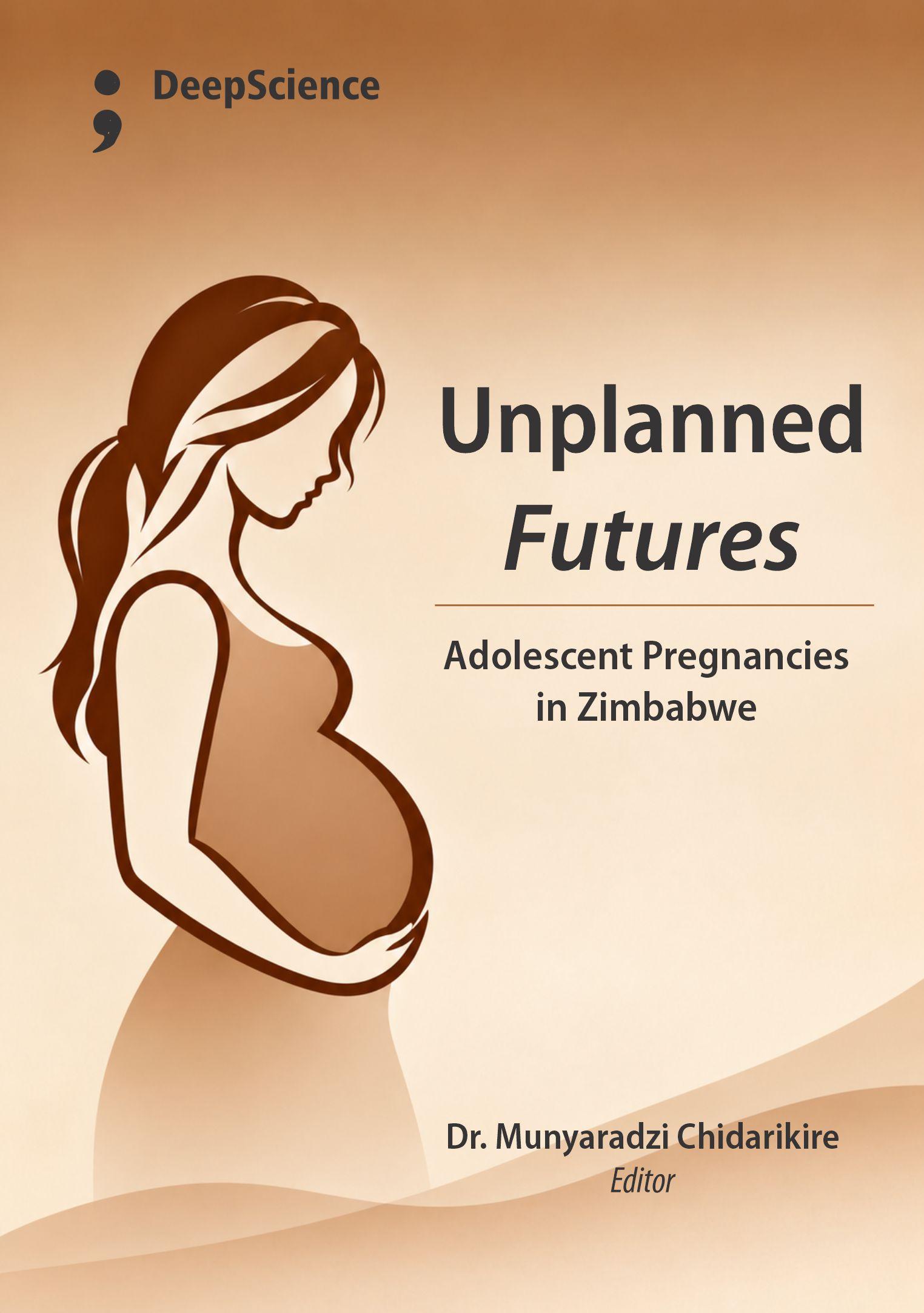
Unplanned Futures: Adolescent Pregnancies in Zimbabwe
##plugins.pubIds.doi.readerDisplayName##
https://doi.org/10.70593/978-81-6632-030-9
Keywords:
Pregnancy, Unwanted Pregnancy, Adolescent Pregnancies, Early Pregnancy, Zimbabwe, Child Protection, Drug AbuseSynopsis
In the sprawling landscape of Zimbabwean education and social welfare, a quiet catastrophe unfolds daily not in dramatic headlines, but in the empty desks of primary classrooms, the whispered confessions of primary, secondary schoolgirls and tertiary level, and the silent desperation of child-headed households. This book titled “Unplanned Futures: Adolescent Pregnancy in Zimbabwe”, does not flinch from that catastrophe. Instead, it dissects it with rigorous scholarship and profound humanity, offering the most comprehensive examination of this crisis that our nation has yet seen. What distinguishes this book is its breath-taking scope. The authors, drawn from the Ministry of Primary and Secondary Education of Primary and Secondary Education, Great Zimbabwe University, University of Zimbabwe, Bindura University of Science, Midlands State University, Zimbabwe Open University, Morgenster Teachers College, United College of Education and Hillside Teachers Colleges, the Ministry of Primary and Secondary Education of Justice, the University of Free State in South Africa, University of Stellenbosch and the University of KwaZulu-Natal in South Africa, represent an unprecedented coalition and multidisciplinary of national and regional expertise. Every page oozes of their enthusiasm for sexual abstinence, gender justice, children's rights and sexual reproductive health rights. Together they transcend dry facts and figures and try to understand the reality of daily life for the most disadvantaged: the primary school child in the small village with a disability, the orphaned girl/child leading a broken household and the university-going girl/young woman who struggles through drug abuse and with an unplanned pregnancy. The chapters here are not isolated case studies but interconnected interventions. They probe the academic wreckage left by early pregnancies at both primary, secondary and tertiary levels, while boldly confronting the policy paradox of "the right to return" versus "the right to belong" asking whether our schools truly welcome back young mothers or merely tolerate their presence. Equally innovative is the exploration of modern solutions: mobile-phone-based counseling, the revitalization of ubuntu values, and the urgent link between online digital exposure and sexual vulnerability. Importantly, the book identifies what few have openly discussed – the increasingly sad link between adolescent suicide with early pregnancies in rural Zimbabwe and provides culturally informed recommendations for prevention and healing. This is no easy read and it shouldn't be. It is a challenge for all decision makers, educators, parents and community champions to shift from unintentional to intentional. These scholars, whose scholarship is carried on these pages, have done their part, research carefully and honestly, and resulting analysis and recommendations that are actionable. Now, the burden falls on us. For every "unplanned future" documented here is a real girl, a real family, and a real nation diminished. Let this book be the turning point—from unplanned futures to deliberate, dignified, and protected ones. The evidence is before us. The cure begins with our response.
By Professor Kudzai Chinyoka is an Associate Professor of Educational Psychology at Great Zimbabwe University in Zimbabwe.
Chapters
-
Unintended Early Pregnancies Harm Academic Performance of Zimbabwe's Primary Pupils
-
Unwanted pregnancies among secondary school learners in Zimbabwe: A qualitative inquiry into academic consequences
-
Early Pregnancy as a Primary Driver of Suicide among Learners in Rural Zimbabwe
-
Relationship between online digital exposure and early unintended pregnancies among adolescents in Zimbabwe
-
Revitalising Ubuntu Values for Preventing Adolescent Pregnancy and Strengthening Child Protection in Rural Zimbabwe
-
Exploring Drug Abuse in relation to Unintended Early Pregnancies Among Learners at a Selected Masvingo Tertiary Institution.
-
Exploring Mobile Phone-Based Counselling Interventions for Preventing Early Unintended Child Pregnancies among Adolescents in Zimbabwe
-
Strong family support system enables pregnant female learners to overcome social isolation in Zimbabwe
-
The Right to Return, But the Right to Belong? Adolescent Pregnancy, School Re-Entry and Educational Inclusion in Zimbabwe: A Counselling Psychology Perspective
-
Lived Experiences of Young Pregnant Rural Primary School Female Learners with Disabilities in Zimbabwe
-
Through Resilience I Decided to Go Back to School Despite being pregnant: Power of resilience
-
Child-Headed Families as a Vulnerability Context for Early Pregnancies among Adolescent Girls in Zimbabwe
-
Sorry Parents, I Was Pregnant Unintentionally: Apology Accepted, Parents Responded – A Case in Zimbabwe
-
Role of Siblings in Supporting Pregnant Family Adolescent Members in Zimbabwe
-
Phobia To Report Rape Cases Increases Unintended Pregnancies in Zimbabwe
-
No Access to Morning After Pills precipitates unintended Pregnancies among learners in rural Zimbabwe
-
Abstinence the Best Pregnancy Prevention Method in Zimbabwe
-
Socio-economic and Cultural Determinants of Adolescent Pregnancy in Zimbabwe
References
Baafi, S. (2020). The plight of young girls: Second-chance education for pregnant schoolgirls and young mothers in Techiman, Ghana. Retrieved from https://thesis.eur.nl/pub/56229
Baa-Poku, J. (2019). Girls' re-entry into school after pregnancy in the Ashiedu Keteke Sub-Metro District, Accra: Implication for substantive policy. Ghana Social Science, 16(71), 1–17.
Bandura, A. (1977). Social learning theory. London. Prentice Hall.
Braun, V., & Clarke, V. (2006). Using thematic analysis in psychology. Qualitative Research in Psychology, 3(2), 77-101.
Chidakwa, N. (2023). Drug abuse: A hindrance to optimal functioning of the rural learner's cognitive capabilities. Research in Social Sciences and Technology, 8(3), 155-175. https://doi.org/10.46303/ressat.2023.25
Chidakwa, N., & Hlalele, D. J. (2021). The paradox of complex systems: Managing multiple vulnerabilities in Zimbabwean rural learning ecologies. Vulnerable Child and Youth Studies. https://doi.org/10.1080/17450128.2021.192538
Chidarikire, M., & Chikwati, T. (2024). Unravelling causes and mitigating suicidal tendencies in male educators in Zimbabwe's rural regions: A comprehensive analysis. Asian Journal of Education and Social Studies, 50(5), 293–303. https://doi.org/10.9734/ajess/2024/v50i51363
Creswell, J. W., & Poth, C. N. (2018). Qualitative inquiry and research design: Choosing among five approaches (4th ed.). London. SAGE Publications.
Girls Not Brides. (2019). Addressing child marriage through education: What the evidence shows. Retrieved from https://www.girlsnotbrides.org/learning-resources/resource-centre/addressing-child-marriage-education-evidence-shows/
Herald. (2024). Silver lining to teen pregnancy risks. The Herald. Retrieved from https://www.herald.co.zw/silver-lining--teen-pregnancy-risks/
Lincoln, Y. S., & Guba, E. G. (1985). Naturalistic inquiry. London. SAGE Publications.
Saruchera, M., & Chidarikire, M. (2024). Promoting inclusive policies to support pregnant grade 6 adolescent learners in Zimbabwe: Implications and solutions. Kuey, 30(11). https://doi.org/10.53555/kuey.v30i11.8237
Published
8 September 2026
Copyright (c) 2026 Munyaradzi Chidarikire; Eugenia Mabika, Netsai Kumpewu, Miriam Masikati, Lilian Chaminuka, Tinevimbo Shumba, Pinias Chikuvadze, Cecilia Muza, Theresia Joakim Kanyopa, Juliet Kamwendo, Alice Kuyayama, Moses Kufakunesu, Joel Marashe, Olivia Kaila, Vongai Mazivazvose, Brenda Muchopa-Chatira, Yolanda N. Tshuma, Margaret Machingambi, Shupikai Zebron, Prudence Mavhemwa, Nozihle Ncube, Abraham Maposa, Everjoy Masanjala, Mildred Kudzanai Chanhuwa, Herbert Muradzikwa, Nkululeko Sibanda, Prince Chidarikire, Patience Marashe
Details about the available publication format: E-Book
E-Book
ISBN-13 (15)
978-81-6632-030-9
Details about the available publication format: Book (Paperback)
Book (Paperback)
ISBN-13 (15)
978-81-6632-031-6
How to Cite
Chidarikire, M. (Ed.). (2026). Unplanned Futures: Adolescent Pregnancies in Zimbabwe. Deep Science Publishing. https://doi.org/10.70593/978-81-6632-030-9
Download Citation









 WhatsApp +91 7977171947