

The Ambivalent Gaze: Feminization, Post-feminism, and the Political Economy of Gender Representation in Indian OTT Media
Synopsis
The shift toward a more female-centric landscape in Indian media, especially across OTT giants like Netflix and Amazon Prime, marks a major turning point in how stories are told and who gets to tell them. This paper looks at how digital streaming has changed the game for women, both in front of the camera and behind the scenes. Using a mix of feminist theory and media critique, the article explores the complicated reality of this newfound visibility. On one hand, these platforms have opened doors for diverse female voices and fresh perspectives; on the other, this progress is often tied to a ‘marketable’ brand of feminism that treats empowerment as a commodity, potentially favouring profit over true social change.
By diving into popular series like Made in Heaven [1] Delhi Crime [2], and Four More Shots Please! [3], this study examines how modern Indian womanhood is portrayed through the lenses of class, sexuality, and city life. While these shows celebrate women as bold and independent, their stories are often limited to a world of urban wealth and traditional beauty standards. At the same time, the rise of directors like Zoya Akhtar and Alankrita Shrivastava shows that women are finally claiming more power in the director’s chair. However, even with these breakthroughs, the industry still struggles with deep-seated inequalities in who actually holds the keys to the kingdom.
We have moved past the era of just counting women in the credits. In the world of OTT, we are seeing a fundamental shift in the Indian gaze, a new way of looking at womanhood that feels more authentic and bold. Yet, this progress exists in a delicate balance: it is at once a powerful step toward liberation and a calculated move in a post-liberalization market.
Downloads
Pages
99-112
Published
11 April 2026
Copyright (c) 2026 Sayak Pal, Sharmila Kayal, Reshmi Naskar; Piu Banerjee, Ashique Rashul, Nilofar Yasmin, Gauri S. Matekar, Dnyaneshwar B. Shirode, Debastuti Dasgupta, Rick Sarkar, Harsha V. Patil, Soumyadeep Sen, Anmol Shekhar Srivastava, Jaya Bharti, Sananda Sen, Debasmita Biswas, Debarpita Naha, Baishali Deb Roy, Abhishek Bhattacharjee, Doyel Dutta
How to Cite
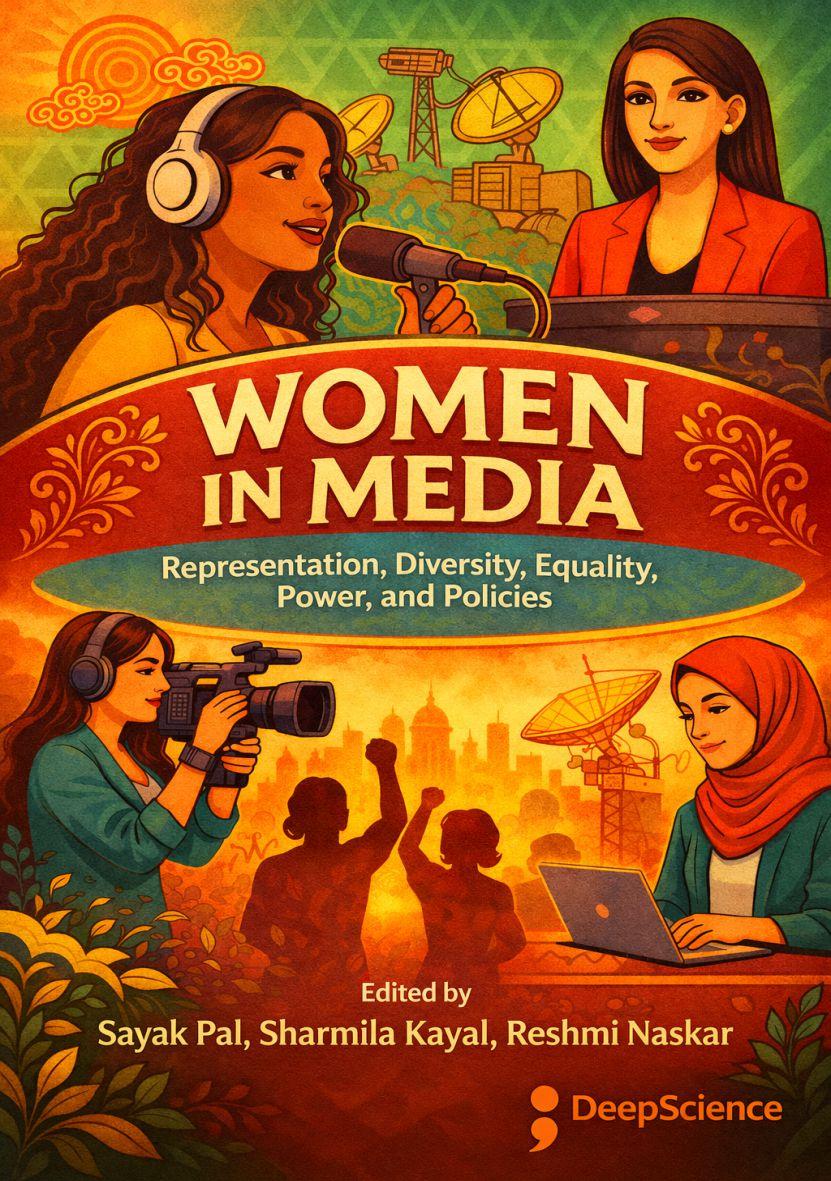
Sen, S. (2026). The Ambivalent Gaze: Feminization, Post-feminism, and the Political Economy of Gender Representation in Indian OTT Media. In S. Pal, S. . Kayal, & R. Naskar (Eds.), Women in Media: Representation, Diversity, Equality, Power, and Policies (pp. 99-112). Deep Science Publishing. https://doi.org/10.70593/978-93-7185-912-7_8
Download Citation







 WhatsApp +91 7977171947