

Women in Indian Mythology and Media Representation: Power, Patriarchy and Reinterpretation
Synopsis
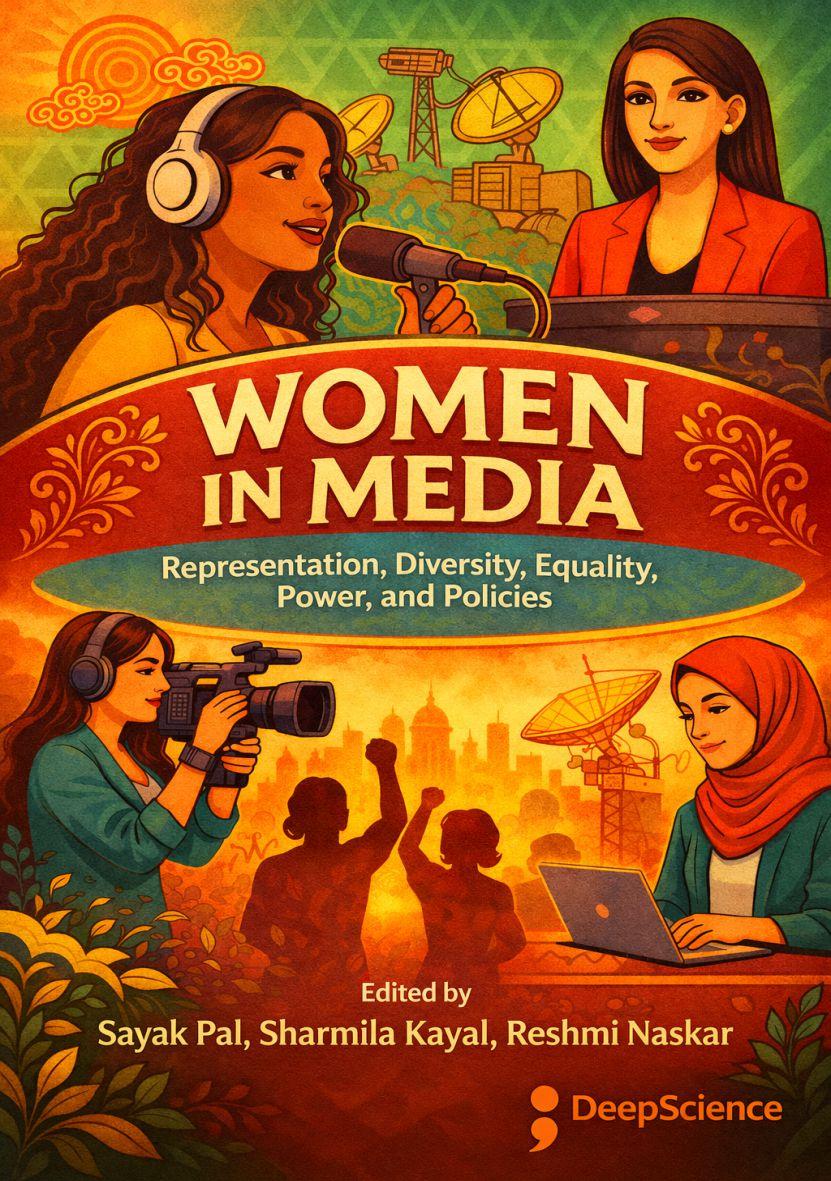
Indian mythology has served as a generative reservoir for narratives circulating across visual and popular media, profoundly influencing collective understandings of gender, morality, and power. [1,7] Female figures drawn from mythological traditions—among them Sita, Draupadi, Durga, Kali, and Shabari—recur across films, television serials, animation, and contemporary digital retellings. Such representations characteristically reflect competing ideological pressures: the tension between patriarchal authority and feminine agency, between devotional idealization and social marginalization. This chapter undertakes a critical examination of how women in Indian mythology are constructed and contested within visual culture, with particular attention to the processes by which media reproduces, negotiates, and transforms mythological femininity. Drawing on feminist media theory and representation theory, the chapter analyses both the conservative portrayals that dominated mythological television serials and early cinema, as well as more recent reinterpretations that have begun to interrogate and destabilize prevailing gender norms. [5,6] By locating mythological women within wider discourses of power, patriarchy, and feminist resistance, the chapter argues that contemporary media has emerged as a vital arena for reimagining mythological narratives and recovering women’s voices. The study contributes to gender and media scholarship by foregrounding mythology as a living cultural text continually reconstituted through changing practices of media representation.
Downloads
Pages
70-83
Published
11 April 2026
Copyright (c) 2026 Sayak Pal, Sharmila Kayal, Reshmi Naskar; Piu Banerjee, Ashique Rashul, Nilofar Yasmin, Gauri S. Matekar, Dnyaneshwar B. Shirode, Debastuti Dasgupta, Rick Sarkar, Harsha V. Patil, Soumyadeep Sen, Anmol Shekhar Srivastava, Jaya Bharti, Sananda Sen, Debasmita Biswas, Debarpita Naha, Baishali Deb Roy, Abhishek Bhattacharjee, Doyel Dutta
How to Cite
Sen, S. (2026). Women in Indian Mythology and Media Representation: Power, Patriarchy and Reinterpretation. In S. Pal, S. . Kayal, & R. Naskar (Eds.), Women in Media: Representation, Diversity, Equality, Power, and Policies (pp. 70-83). Deep Science Publishing. https://doi.org/10.70593/978-93-7185-912-7_6
Download Citation








 WhatsApp +91 7977171947