

Women In Indian Television Advertisements
Synopsis
Television advertisements are everywhere. They play in the background while we handle the chores, interrupt our favourite shows, and somehow manage to stick in our heads long after we've seen them. But beyond selling products, they do something more subtle — they reflect and reinforce how society thinks, including how we see men and women.
Television combines sound and visuals, and so it's particularly good at shaping attitudes, often without realising it. And when the same ideas appear over and over across millions of screens, they start to feel normal — even when they shouldn't.
This study looks at how women are represented in Indian television advertisements, and what those representations tell us about gender in Indian society. Using a framework called Critical Discourse Analysis, developed by Norman Fairclough, it reveals the visual and symbolic choices that commercial advertisements make. The imagery, the storylines, the roles women are given, and asks what ideas about gender those choices quietly promote. Beneath the polished packaging, many commercials reflect unequal power dynamics, often placing women in passive, domestic, or purely decorative roles.
Ten televised advertisements were selected from major Indian TV channels; deliberately chosen to cover the kinds of products most people encounter in daily life: 1. Household goods, 2. Beauty products, 3. Automobile, 4. Clothing, 5. Everyday services. The goal was to gain a realistic understanding of how women are typically portrayed in mainstream Indian advertising.
What the analysis found wasn't surprising, but it was striking: Indian TV commercials frequently box women into narrow, traditional roles. These portrayals aren't just reflections of society — they actively shape it, nudging viewers toward particular ideas about what women are, what they do, and where they belong.
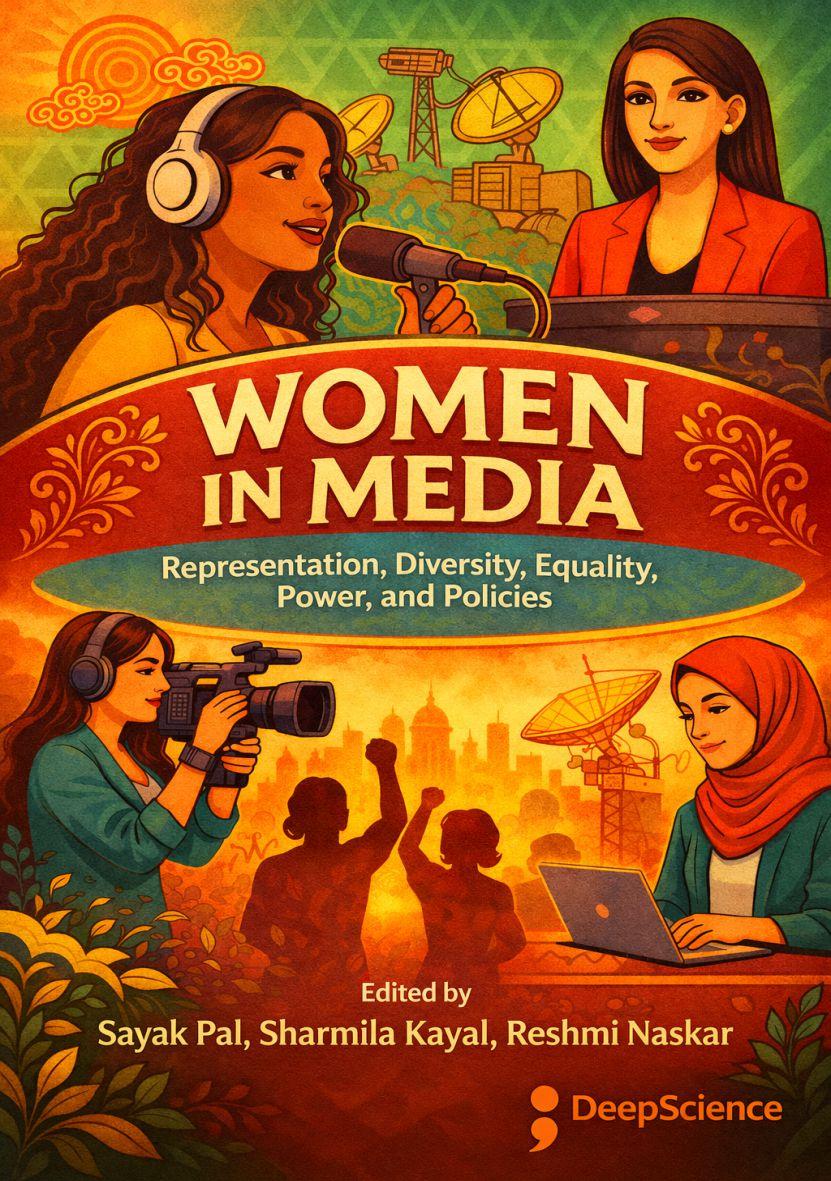
Downloads
Pages
28-41
Published
11 April 2026
Copyright (c) 2026 Sayak Pal, Sharmila Kayal, Reshmi Naskar; Piu Banerjee, Ashique Rashul, Nilofar Yasmin, Gauri S. Matekar, Dnyaneshwar B. Shirode, Debastuti Dasgupta, Rick Sarkar, Harsha V. Patil, Soumyadeep Sen, Anmol Shekhar Srivastava, Jaya Bharti, Sananda Sen, Debasmita Biswas, Debarpita Naha, Baishali Deb Roy, Abhishek Bhattacharjee, Doyel Dutta
How to Cite
Matekar, G. S., & Shirode, D. B. (2026). Women In Indian Television Advertisements. In S. Pal, S. . Kayal, & R. Naskar (Eds.), Women in Media: Representation, Diversity, Equality, Power, and Policies (pp. 28-41). Deep Science Publishing. https://doi.org/10.70593/978-93-7185-912-7_3
Download Citation










 WhatsApp +91 7977171947