

Understanding Food and Nutritional Security Status Through a Regional Perspective
##plugins.pubIds.doi.readerDisplayName##
https://doi.org/10.70593/978-93-7185-866-3
Keywords:
Food, Nutrition, Security , Food Safety, Food Requirements, PopulationSynopsis
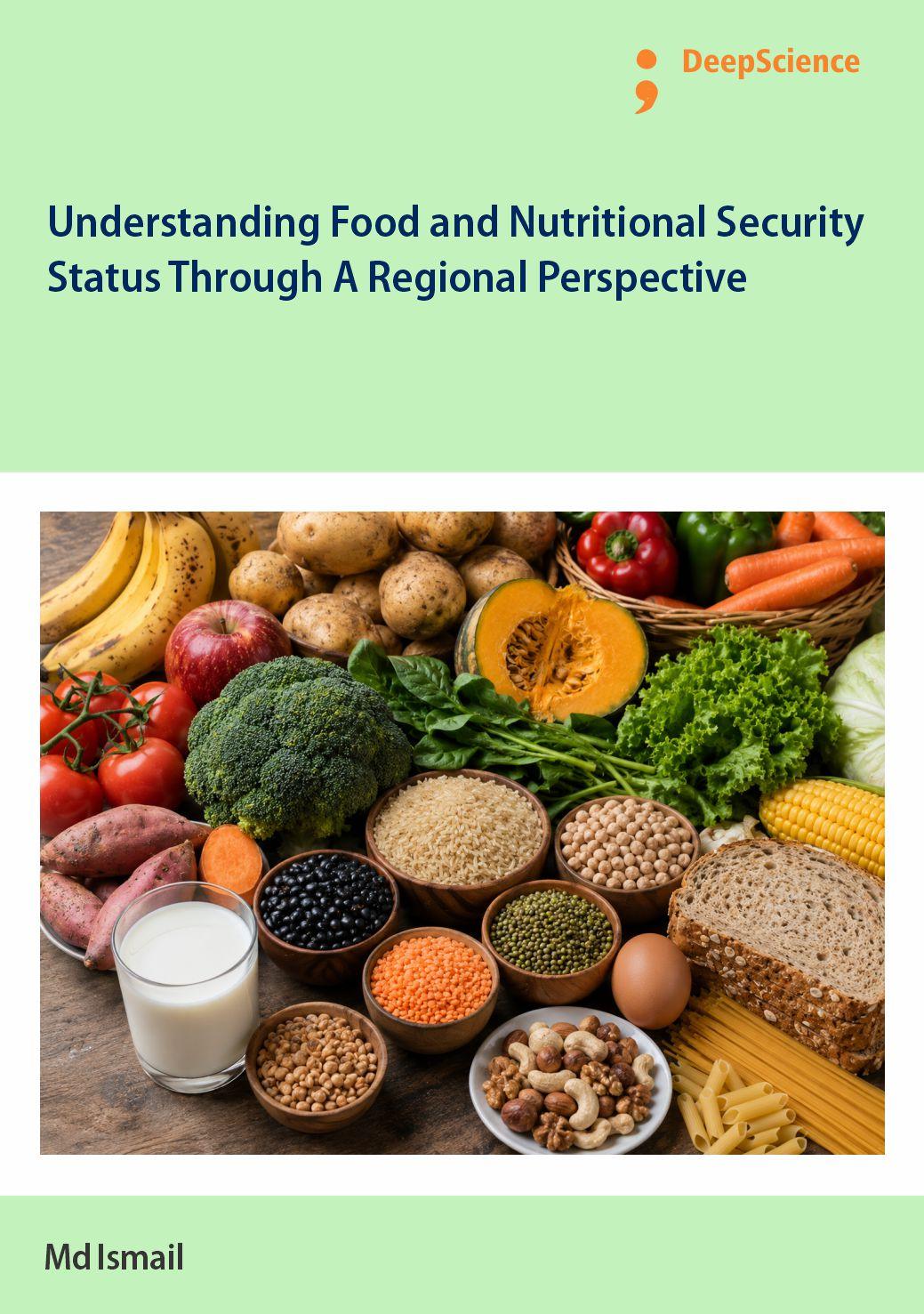
Food is the basic need and everyone has birth right but everywhere people are facing food problems. Worldwide people are not getting basic food to live active and healthy life. According to WHO report (2020) more than 690 million people are food insecure in the world and Asia, Africa and Latin America are called the storehouse of food insecure population. Worldwide various organizations, agency and each countries government were taking initiative to reduce to poverty level as well as provide minimum food but due to lack of infrastructure, management, lack of funds, government corruption and various associated factors are vital caused to reduce poverty very slowly. The developing countries are facing more problems where nearly 90% under nourished people are living. World produced sufficient amount of food but everyone could not get availability, accessibility and stability. When worldwide billions of tons food is wasted by people, government and so one, at the same time millions of people do not get minimum food for feeding. Mainly unequal distribution and lack of purchasing are other reasons for food insecurity. Five years after worldwide targets to end poverty but still 8.9% of the world population are food insecure. WHO said that 57percent population in Southern Asia and sub-Saharan Africa cannot afford a healthy diet and two billion population worldwide did not have access to sufficient amount, safe, nutritious food in 2019.According to WHO, currently 21.3% of children under 5years of age were stunted, 6.9percent wasted and 5.6 percent overweight. India, China, Bangladesh, Pakistan Nepal etc. are countries where regional inequality and unequal distribution of food are the major challenges and government still fails to reduce poverty satisfactorily. So large percentages of people are living here under below poverty level and most of the households are maintaining caloric requirement from staple food. In India, its 27% population are living below the poverty level and in terms of caloric intake and healthy food intakes very low percentage of households are food secure. The study area is very backward region in India where almost every year flood occurs and washes away crops, food storage, collapses houses and properties. According to government estimates, more than 50percent population are still living under the below poverty level and this district has the habitants of minority Muslim, Santhal tribes, Scheduled caste and Scheduled tribes’ populations. Socio-economically these sections of populations are backward all over India and here also same situation prevails. Malda district is predominantly agriculture based where maximum households depend on crops field and migratory works. The main aims of this study is to show the food security status on various dimensions, area and various communities are considered for determinants. Because food security status also varies from community to community due to their food habits as well as socio-economic conditions. The study will be very useful to those researchers who will work in the fields of food insecurity, poverty, hunger, malnutrition, and related aspects and this study gives very clear explanation on the basis of various dimensions.
References
Aalbersberg, W. (1990). Food composition’ in Food and nutrition in Fiji. Fiji School of Medicine, Institute of Pacific Studies, Dietetics and Nutrition Department. The University of the South Pacific Press.
Sen, A. (1981). "Poverty & Famines: An Essay on Entitlement and Deprivation", Clarendon Press, Oxford
Acharya, K. ( 1983). Food Security System in India. New Delhi: Concept Publishing Company.
Alhuwalia, M. S. ( 1985). Rural Poverty, Agricultural Production, and Prices: A Re-examination. In J. M. Desai, Agricultural Change and Rural Poverty. Baltimore, MD: Johns Hopkins University Press.
Bigman, D. (1982). Coping with Hunger: Towards a System of Food Security and Price Stabilization. Massachusetts: Cambridge.
Chakravarty, S. (1988). Development Planning: The Indian Experience. New York: Oxford University Press.
Chopra, R. (1988). Food Policy in India. New Delhi: Intellectual Publishing House.
Dayal, R. ( 1968). India’s New Food Strategy. New Delhi: Metropolitan Book Co. Pvt. Ltd.
Dey, S. ( 1996). Food Security: PDS vs. EGS A Tale of Two States. Economic and Political Weekly, 31(27), 1752-64.
FAO. (1974). The World Food Conference in 1974, United Nation, Rome.
FAO. (1980). The State of Food and Agriculture 1979, FAO /UN, Rome.
FAO. (2013). State of Food Insecurity in the World, United Nations.
Ghosh, B. (1978). Studies in Population and Economic Development. In A. Dee Mohammad, Situation of Food and Nutrition in Rural India. New Delhi: Concept Publication.
Gopalan, C. et. al.(1969). Diet Atlas of India. National Institute of Nutrition. Hyderabad: ICMR.
Hanafi, et. al. ( 1999). Declining Trend of Foodgrains Availability and Food Security in U.P. The Geographer, 46(2), 137-154..
Hashim, S. (1997). Food Security and Poverty. Journal of the Indian Society of Agricultural Statistics, 1(3), 240-50.
Hedge, N. (2000). Challenges of Food Insecurity- Call for a Paradigm Shift. Indian Farming, 50(7), 18-21.
International Monetary Fund . (1981). Compensatory Financing for Fluctuations in the Cost of Cereal Imports, Louis Goreux, in Food Security for Developing Countries. Secretariat, Paper, No. 13, London.
John, B. O. ( 1953). The White Man’s Dilemma: Food and the Future. London: George Allen and Unwin Ltd.
Klensin J.C., et. al. (1989). Identification of Food Components for INFOODS Data Interchange. United Nations University, Tokyo.
Mohammad, A. ( 1989). Food Production and Food Problem in India. New Delhi: Concept Publication.
Mohammad, A. (1981). Regional Imbalances in Lands of Agricultural Productivity. In M. Noor, Perspective in Agricultural Geography. New Delhi: Concept Publishing Company.
Mohammad, A. (1986). Food and Nutrition in India. New Delhi: Rajesh Publications.
Mukherjee, R. (1938). Food Planning for Hundred Millions. London: Macmillan & Company Limited.
Radhakrishna, R. ( 1991). Food and Nutrition: Challenges for Policy. Journal of the Indian Society of Agricultural Statistics, 43(3), 211-27.
Sarkar, A. ( 2001). National Food Security Perspectives with a Global Vision. Indian Farming, 50(10), 29-36.
Tarrant, J. (1990). World Food Prospects for the 1990s. Journal of Geography, 89(6), 234-38.
United Nations World Food Counci. (n.d.). World Food Security and Market Stability: a Developing Country Owned Reserve. Rome: 1982.
United States Department of Agriculture. ( 1977). The Relationship between Trade and World Food Security. Washington, D.C.: Dale Hathaway.
Published
3 August 2026
Copyright (c) 2026 Md Ismail
Details about the available publication format: E-Book
E-Book
ISBN-13 (15)
978-93-7185-866-3
Details about the available publication format: Book (Paperback)
Book (Paperback)
ISBN-13 (15)
978-93-7185-868-7
How to Cite
Md Ismail. (2026). Understanding Food and Nutritional Security Status Through a Regional Perspective. Deep Science Publishing. https://doi.org/10.70593/978-93-7185-866-3
Download Citation










 WhatsApp +91 7977171947