

Water Treatment & Softening Methods
Synopsis
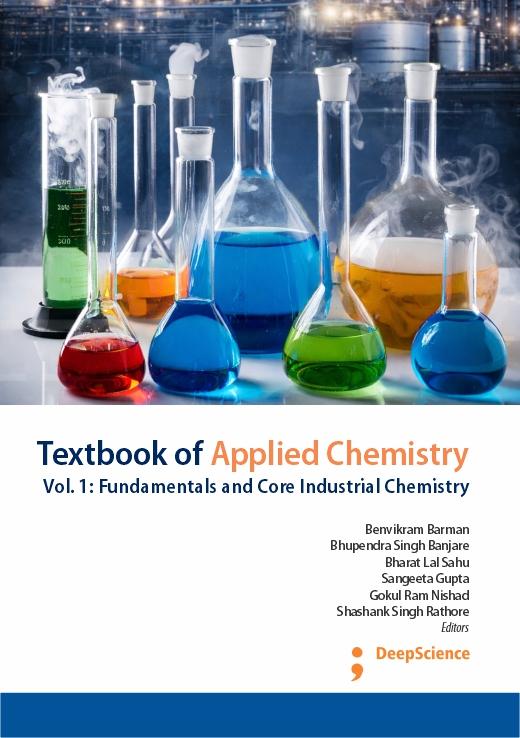
Water treatment and water softening methods are emphasized in this chapter as well as their functionality in industries and environment. Water which is used in the household, industrial and power plant applications is normally dissolved with salts, hard ions and impurities that affect the effectiveness and safety. The chapter explains the softening (lime-soda treatment, zeolite ion exchange, and reverse osmosis) and explains the principles of operation, parameters of operation, and the optimization strategies of the process. These advanced techniques as desalination and membrane filtration are discussed as the ones that are utilized in the process of receiving potable and industrial process water. Case studies reveal its application in practice in boiler water treatment, municipal water supply and wastewater treatment and that it has problems including scaling, sludge disposal and energy demand. The chapter is a mixture of theoretical chemistry, analytical monitoring and industrial practices thus enabling the students to understand design, selection and operation of water treatment systems. It is concerned with sustainability, reduction in environmental impact and management of water resources. Students will be able to know how to relate the taught chemical principles with the real-life process of water treatment that could be used in the spheres of environmental engineering, chemical industries, municipal water management and the study of the sustainable water solutions.
Downloads
Pages
363-378
Published
10 February 2026
Copyright (c) 2026 Dr. Benvikram Barman, Dr. Bhupendra Singh Banjare; Dr. Manoj Kumar Banjare; Dr. Bharat Lal Sahu, Dr. Sangeeta Gupta, Mr. Gokul Ram Nishad, Mr. Shashank Singh Rathore; Mrs. Hema R. Tandon, Mrs. Neelam Ram Dhansay, Dr. Toshikee Yadav, Mr. Santosh Kumar Dahariya, Ms. Aditi Banjare, Mr. Ganesh Ram Kurrey; Mrs. Poonam Thawait; Mr. Chitresh Kumar Bareth, Mr. Rupendra Kumar , Dr. Sandhya Rani Panda, Dr. Manisha Thakur, Dr. Prachi P Nimje, Mr. Ajhar Ali, Mr. Rupesh Kumar, Ms. Shaesta Jabeen, Dr. Tula Ram Sahu, Ms. Namrata Tamboli, Mr. Pradeep Kanher, Mr. Seecharan Banjare , Ms. Suman R. Tirkey, Mr. Yashwant Raj Mahilane, Dr. Swati Chandrawanshi, Mr. Sudhanshu Kumar Giri, Mr. Sagar Kumar Rajak, Dr. Akansha Ekka, Dr. Jyoti Diwan, Dr. Khilawan Patel, Mr. Mukesh Kumar Patel, Mrs. Madhuri Patel, Chitrakiran Patel, Dr. Manoj Kumar Banjare, Dr. Prachi P Nimje, Dr. Sandhya Rani Panda, Mr. Prakashmani Sahu
How to Cite
Patel, K., Patel, M. K., & Patel, M. (2026). Water Treatment & Softening Methods. In B. Barman, B. S. Banjare, B. L. Sahu, S. Gupta, G. R. Nishad, & S. S. Rathore (Eds.), & P. Thawait, Textbook of Applied Chemistry (pp. 363-378). Deep Science Publishing. https://doi.org/10.70593/978-93-7185-430-6_29
Download Citation



 WhatsApp +91 7977171947