

Primary & Secondary Batteries
Synopsis
The chapter has been dedicated to primary and secondary batteries, their chemistry, design and industrial applications. Primary batteries. These are nonrechargeable batteries, e.g. alkaline and zinc-carbon cells, which produce electrical energy through spontaneous chemical reactions and are applied in household equipment. Rhodomelus and Joerges (2001) also add that rechargeable secondary batteries like lead-acid, nickel-cadmium, and lithium-ion batteries may be used as long-term energy storage in vehicles, portable electronics, and renewable energy systems. The battery parts, along with operating principle, energy density, efficiency and cycle life have been covered in the chapter with a focus on the parameters that influence performance and life cycle. It focuses on industrial applications, particularly to electric automobiles, grid storage and consumer electronics, where the battery capacity and reliability are critical. Thermal stability, capacity fading and environmental impact issue is also addressed and the way of enhancing the safety and efficiency of the battery. By the use of the theory and practical examples, the chapter offers students a comprehensive understanding of the storage of electrochemical energy, design and technological development. The study of batteries spans over the fundamental electrochemistry and the applied engineering disciplines, preparing students to be employed in the research of energy storage, electronics, automobile manufacturing, and sustainable technology.
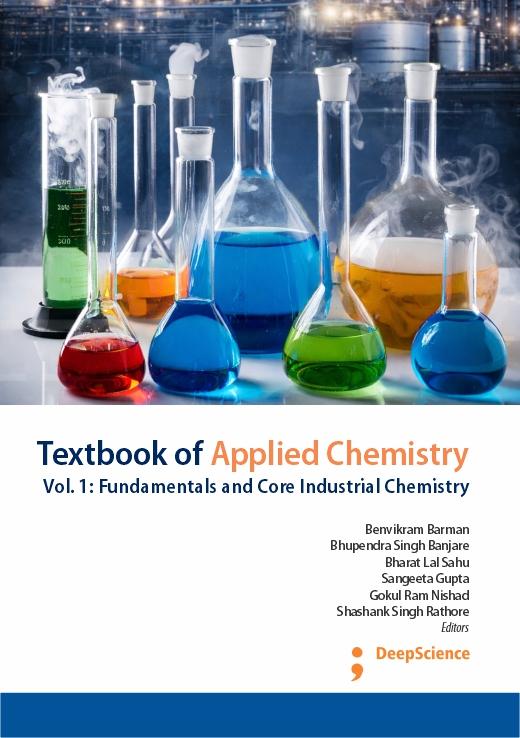
Downloads
Pages
137-152
Published
10 February 2026
Copyright (c) 2026 Dr. Benvikram Barman, Dr. Bhupendra Singh Banjare; Dr. Manoj Kumar Banjare; Dr. Bharat Lal Sahu, Dr. Sangeeta Gupta, Mr. Gokul Ram Nishad, Mr. Shashank Singh Rathore; Mrs. Hema R. Tandon, Mrs. Neelam Ram Dhansay, Dr. Toshikee Yadav, Mr. Santosh Kumar Dahariya, Ms. Aditi Banjare, Mr. Ganesh Ram Kurrey; Mrs. Poonam Thawait; Mr. Chitresh Kumar Bareth, Mr. Rupendra Kumar , Dr. Sandhya Rani Panda, Dr. Manisha Thakur, Dr. Prachi P Nimje, Mr. Ajhar Ali, Mr. Rupesh Kumar, Ms. Shaesta Jabeen, Dr. Tula Ram Sahu, Ms. Namrata Tamboli, Mr. Pradeep Kanher, Mr. Seecharan Banjare , Ms. Suman R. Tirkey, Mr. Yashwant Raj Mahilane, Dr. Swati Chandrawanshi, Mr. Sudhanshu Kumar Giri, Mr. Sagar Kumar Rajak, Dr. Akansha Ekka, Dr. Jyoti Diwan, Dr. Khilawan Patel, Mr. Mukesh Kumar Patel, Mrs. Madhuri Patel, Chitrakiran Patel, Dr. Manoj Kumar Banjare, Dr. Prachi P Nimje, Dr. Sandhya Rani Panda, Mr. Prakashmani Sahu
How to Cite
Banjare, A. (2026). Primary & Secondary Batteries. In B. Barman, B. S. Banjare, B. L. Sahu, S. Gupta, G. R. Nishad, & S. S. Rathore (Eds.), & P. Thawait, Textbook of Applied Chemistry (pp. 137-152). Deep Science Publishing. https://doi.org/10.70593/978-93-7185-430-6_12
Download Citation






 WhatsApp +91 7977171947