

Enzyme Catalysis in Biochemistry
Synopsis
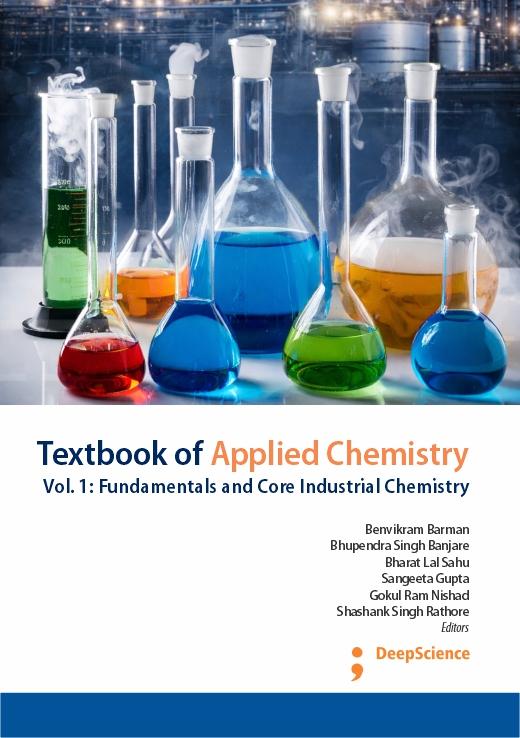
The phenomenon of enzyme catalysis is discussed by the author in this chapter, and the role of the phenomenon in both industrial applications and biochemical processes. Enzymes are biochemical catalysts, and they are highly specific and efficient catalysts of reactions under mild conditions without being depleted. The chapter explores the enzyme structure, the active sites and substrate specificity, and this prevents the understanding of how the catalytic activity is determined by the molecular architecture. It also introduces the Michaelis-Menten kinetics, i.e. the relationship between substrate concentration and rate, and also emphasises such parameters as Vmax and Km and the use of enzymes in industrial processes, particularly food processing, pharmaceutical, biofuels, detergents and waste treatment and hence a sustainable and environmentally friendly process. The chapter places more emphasis on enzyme immobilization, enhancing stability, and optimization of processes that will ensure its successful implementation on an industrial level. The chapter provides an insight that is comprehensive as it relates biochemistry and industrial chemistry to enable the reader to understand how enzymatic catalysis could be used to increase the rate of reaction, reduce energy consumption, and mitigate the environmental effects. This is crucial to the learners who are strategizing to be experts in the field of biotechnology, biochemical engineering, and industrial enzymology.
Downloads
Pages
101-111
Published
10 February 2026
Copyright (c) 2026 Dr. Benvikram Barman, Dr. Bhupendra Singh Banjare; Dr. Manoj Kumar Banjare; Dr. Bharat Lal Sahu, Dr. Sangeeta Gupta, Mr. Gokul Ram Nishad, Mr. Shashank Singh Rathore; Mrs. Hema R. Tandon, Mrs. Neelam Ram Dhansay, Dr. Toshikee Yadav, Mr. Santosh Kumar Dahariya, Ms. Aditi Banjare, Mr. Ganesh Ram Kurrey; Mrs. Poonam Thawait; Mr. Chitresh Kumar Bareth, Mr. Rupendra Kumar , Dr. Sandhya Rani Panda, Dr. Manisha Thakur, Dr. Prachi P Nimje, Mr. Ajhar Ali, Mr. Rupesh Kumar, Ms. Shaesta Jabeen, Dr. Tula Ram Sahu, Ms. Namrata Tamboli, Mr. Pradeep Kanher, Mr. Seecharan Banjare , Ms. Suman R. Tirkey, Mr. Yashwant Raj Mahilane, Dr. Swati Chandrawanshi, Mr. Sudhanshu Kumar Giri, Mr. Sagar Kumar Rajak, Dr. Akansha Ekka, Dr. Jyoti Diwan, Dr. Khilawan Patel, Mr. Mukesh Kumar Patel, Mrs. Madhuri Patel, Chitrakiran Patel, Dr. Manoj Kumar Banjare, Dr. Prachi P Nimje, Dr. Sandhya Rani Panda, Mr. Prakashmani Sahu
How to Cite
Thawait, P. (2026). Enzyme Catalysis in Biochemistry. In B. Barman, B. S. Banjare, B. L. Sahu, S. Gupta, G. R. Nishad, & S. S. Rathore (Eds.), Textbook of Applied Chemistry (pp. 101-111). Deep Science Publishing. https://doi.org/10.70593/978-93-7185-430-6_9
Download Citation





 WhatsApp +91 7977171947