

Factors Affecting Reaction Rates
Synopsis
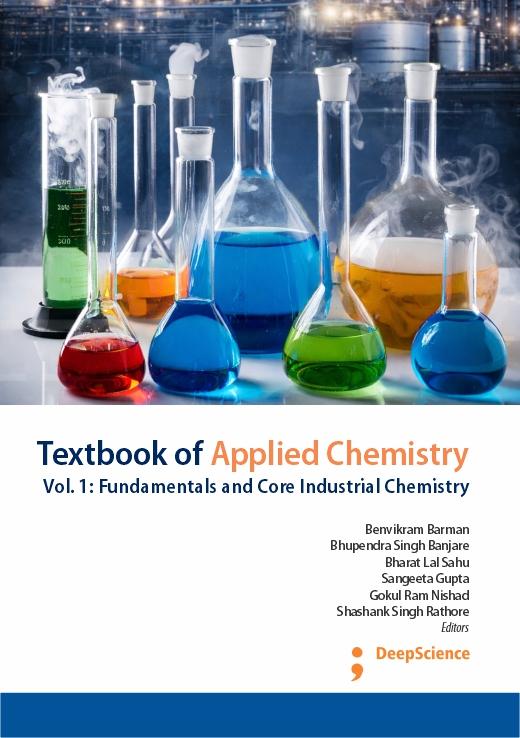
This chapter discusses the many factors that affect the rate of chemical reactions with a critical insight into the laboratory and industrial fields. Some of the important factors that were discussed are temperature, pressure, concentration of reactants, catalysts, and solvent effects, which have a significant influence on reaction kinetics and the formation of products. The chapter describes the impact of temperature on molecular collisions and activation energy, pressure on gas reactions, and the concentration on reaction frequency. The mechanism of catalysts in reducing the activation energy and increasing the reaction rate without undergoing consumption is explained, the interaction of solvents with the reaction medium polarity, and the reaction mechanism. The industrial applications are also presented by illustrative examples of the chemical manufacturing industry, polymer manufacturing industry, pharmaceuticals and catalytic-based industries and the significance of optimization of the reaction conditions to make it efficient, safe and economically viable. The chapter is a combination of theory and practice that can enable students to know how to regulate the rate of reactions, enhance yields, decrease energy use, and create safer chemical reactions. Process engineers, industrial chemists, and researchers should be aware of such factors so that they can come up with effective, scalable, and sustainable chemical operations.
Downloads
Pages
78-87
Published
10 February 2026
Copyright (c) 2026 Dr. Benvikram Barman, Dr. Bhupendra Singh Banjare; Dr. Manoj Kumar Banjare; Dr. Bharat Lal Sahu, Dr. Sangeeta Gupta, Mr. Gokul Ram Nishad, Mr. Shashank Singh Rathore; Mrs. Hema R. Tandon, Mrs. Neelam Ram Dhansay, Dr. Toshikee Yadav, Mr. Santosh Kumar Dahariya, Ms. Aditi Banjare, Mr. Ganesh Ram Kurrey; Mrs. Poonam Thawait; Mr. Chitresh Kumar Bareth, Mr. Rupendra Kumar , Dr. Sandhya Rani Panda, Dr. Manisha Thakur, Dr. Prachi P Nimje, Mr. Ajhar Ali, Mr. Rupesh Kumar, Ms. Shaesta Jabeen, Dr. Tula Ram Sahu, Ms. Namrata Tamboli, Mr. Pradeep Kanher, Mr. Seecharan Banjare , Ms. Suman R. Tirkey, Mr. Yashwant Raj Mahilane, Dr. Swati Chandrawanshi, Mr. Sudhanshu Kumar Giri, Mr. Sagar Kumar Rajak, Dr. Akansha Ekka, Dr. Jyoti Diwan, Dr. Khilawan Patel, Mr. Mukesh Kumar Patel, Mrs. Madhuri Patel, Chitrakiran Patel, Dr. Manoj Kumar Banjare, Dr. Prachi P Nimje, Dr. Sandhya Rani Panda, Mr. Prakashmani Sahu
How to Cite
Banjare, A. (2026). Factors Affecting Reaction Rates. In B. Barman, B. S. Banjare, B. L. Sahu, S. Gupta, G. R. Nishad, & S. S. Rathore (Eds.), & P. Thawait, Textbook of Applied Chemistry (pp. 78-87). Deep Science Publishing. https://doi.org/10.70593/978-93-7185-430-6_7
Download Citation







 WhatsApp +91 7977171947