

Laws of Thermodynamics in Chemistry
Synopsis
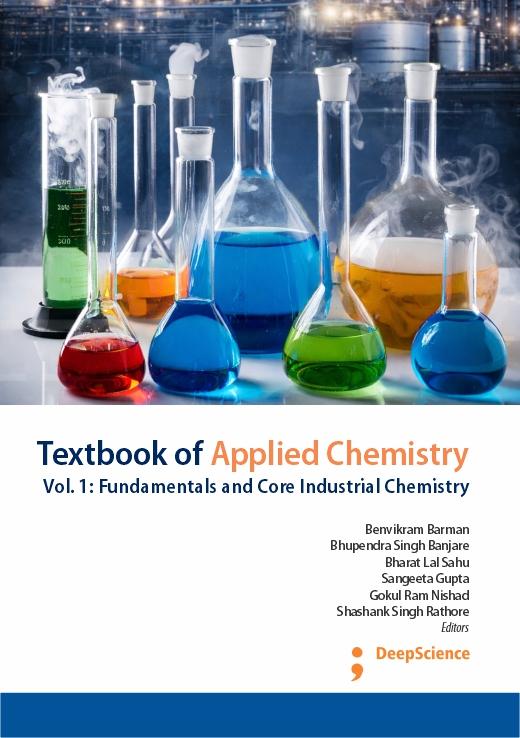
It provides an elaborate discussion of the thermodynamic laws and their application in chemistry and industries. It begins with the zeroth law that establishes the basis of the thermal equilibrium law, the first law, which is connected to the heat, work and internal energy, and provides a background to the energy conservation both in the chemical and industrial systems. The second and third laws introduce the notion of entropy, which describes the directionality and spontaneity of chemical reactions, the third law describes the absolute entropy at zero Kelvins that it useful to know low-temperature systems. The chapter establishes a high emphasis on industrial application like power plants, refrigeration, chemical reactors and energy management where thermodynamic is applied to control the efficiency, heat transfer and optimization of these processes. The case studies explain how thermodynamics have assisted in improving energy efficiency, wastes reduction, and generating sustainable industrial processes. The chapter brings an insight into the ability to quantitatively analyze chemical processes, predicting reaction behavior, and streamlining operations within the industries, which turn the students into those capable of using theories and real-life examples. This is one of the rudimentary knowledge of thermodynamics, required to a career in chemical engineering, energy management, process development, and industrial chemistry.
Downloads
Pages
28-41
Published
10 February 2026
Copyright (c) 2026 Dr. Benvikram Barman, Dr. Bhupendra Singh Banjare; Dr. Manoj Kumar Banjare; Dr. Bharat Lal Sahu, Dr. Sangeeta Gupta, Mr. Gokul Ram Nishad, Mr. Shashank Singh Rathore; Mrs. Hema R. Tandon, Mrs. Neelam Ram Dhansay, Dr. Toshikee Yadav, Mr. Santosh Kumar Dahariya, Ms. Aditi Banjare, Mr. Ganesh Ram Kurrey; Mrs. Poonam Thawait; Mr. Chitresh Kumar Bareth, Mr. Rupendra Kumar , Dr. Sandhya Rani Panda, Dr. Manisha Thakur, Dr. Prachi P Nimje, Mr. Ajhar Ali, Mr. Rupesh Kumar, Ms. Shaesta Jabeen, Dr. Tula Ram Sahu, Ms. Namrata Tamboli, Mr. Pradeep Kanher, Mr. Seecharan Banjare , Ms. Suman R. Tirkey, Mr. Yashwant Raj Mahilane, Dr. Swati Chandrawanshi, Mr. Sudhanshu Kumar Giri, Mr. Sagar Kumar Rajak, Dr. Akansha Ekka, Dr. Jyoti Diwan, Dr. Khilawan Patel, Mr. Mukesh Kumar Patel, Mrs. Madhuri Patel, Chitrakiran Patel, Dr. Manoj Kumar Banjare, Dr. Prachi P Nimje, Dr. Sandhya Rani Panda, Mr. Prakashmani Sahu
How to Cite
Tandon, H. R. (2026). Laws of Thermodynamics in Chemistry . In B. Barman, B. S. Banjare, B. L. Sahu, S. Gupta, G. R. Nishad, & S. S. Rathore (Eds.), & P. Thawait, Textbook of Applied Chemistry (pp. 28-41). Deep Science Publishing. https://doi.org/10.70593/978-93-7185-430-6_3
Download Citation







 WhatsApp +91 7977171947