

Translational Challenges and Future Directions in 3-D for PCOS Nanotherapy
Synopsis
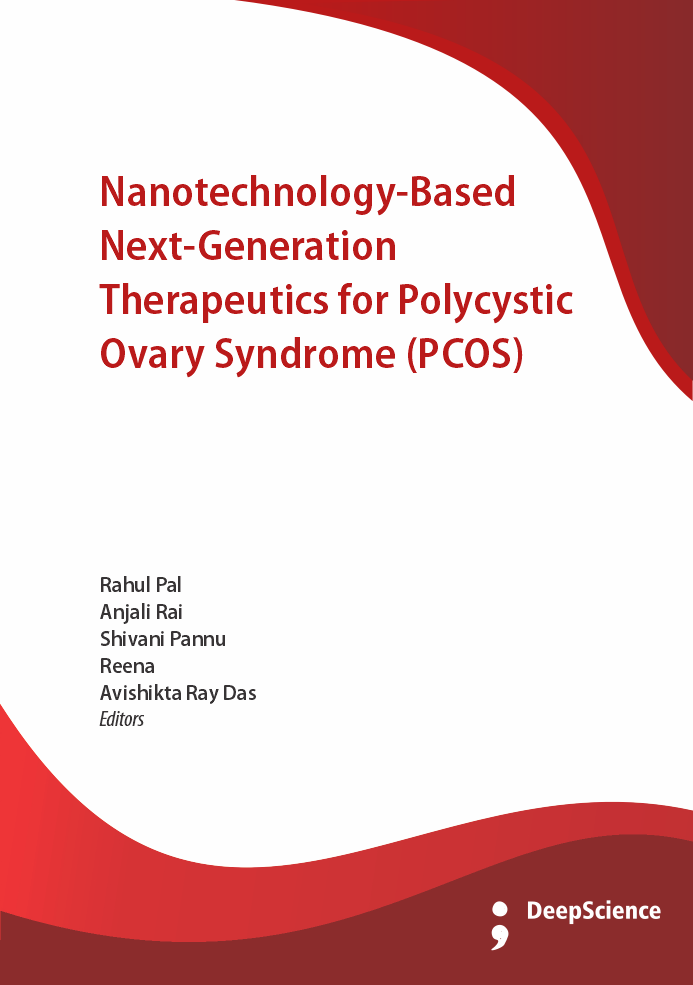
Polycystic Ovary Syndrome (PCOS) is a multifactorial endocrine and metabolic disorder with complex pathophysiology characterized by dysregulations of various hormones, insulin resistance, and chronic inflammation, and continues to pose difficulties to standard treatment. The advent of nanotechnology is likely to provide effective and bioaccessible treatment due to its capabilities in targeted and sustained drug release. Recently, 3-Dimension (3-D) nanotherapeutic model cell cultures, organoids, and bioprinted ovarian tissues have transformed PCOS preclinical investigations as these provide clinically accurate simulations for drug and mechanism of action screening, albeit there are still several hurdles to overcome for these models to clinically serve PCOS patients, including reproducibility and scalability, regulatory difficulties, and minimal clinical validations. This chapter discusses the challenges related to the translation of 3-D nanotherapy, PCOS, and the ethics and regulations of the technology. In addition, artificial intelligence, omics, and microfluidic organ-on-chip systems are discussed to further preclinical and clinical integration. This chapter aims to provide a roadmap for the integration of nanomedicine, bioengineering, and reproductive endocrinology to advance personalized and precision nanotherapy for PCOS.
Downloads
Pages
155-183
Published
15 July 2025
Copyright (c) 2025 Mr. Rahul Pal (Young Scientist), Ms. Anjali Rai, Ms. Shivani Pannu, Km. Reena, Dr. Avishikta Ray Das; Jhilli Basu, Jyoti Devi, Diksha Chauhan, Priya Jaswal, Binita Ghosh, Shantanu Prajapati, Sushant Mouraya, Sneha Patil, Nikhil Rajnani, Monal Jain, Nalini Kurup , Ranjan Kumar Singh, Komal Sharma, Mantun Prasad Gupta, Ravikant, Mahesh Singh Rajpurohit, Vaibhav Saxena, Ajay Garg, Raman Kumari, Priyanka Rani, Kamal Kumar Daal, Sami Ahmad, Sneha Chauhan, Sheelendra Kumar, Hemant Sharma, Rishabh Gupta, Shweta Singh, Tanuja, Harsh Goswami, Abhishek Tyagi, Sonal Sharma, Subhanshi Vishwas, Sami Ahmad, Kamal Kumar Daal, Divyansh Bhatnagar, Rishabh Gupta, Shweta Singh, Vandna Tiwari, Subhanshi Vishwas, Shivang Shukla, Sushant M. Ahire, Prerana S. Pawar, Shivraj P. Jadhav, Vijay V. Shewale, Chandrashekhar D. Patil, Sunil K. Mahajan, Subhanshi Vishwas
How to Cite
Ahmad, S. ., Daal, K. K. ., Bhatnagar, D. ., Gupta, R. ., Singh, S. ., Tiwari, V. ., Vishwas, S. ., & Shukla, . S. . (2025). Translational Challenges and Future Directions in 3-D for PCOS Nanotherapy . In R. Pal, A. Rai, S. . Pannu, Reena, & A. R. . Das (Eds.), Nanotechnology NextGen: From Treatment to Transformation in Polycystic Ovary Syndrome (PCOS) (pp. 155-183). Deep Science Publishing. https://doi.org/10.70593/978-93-7185-087-2_7
Download Citation




 WhatsApp +91 7977171947