

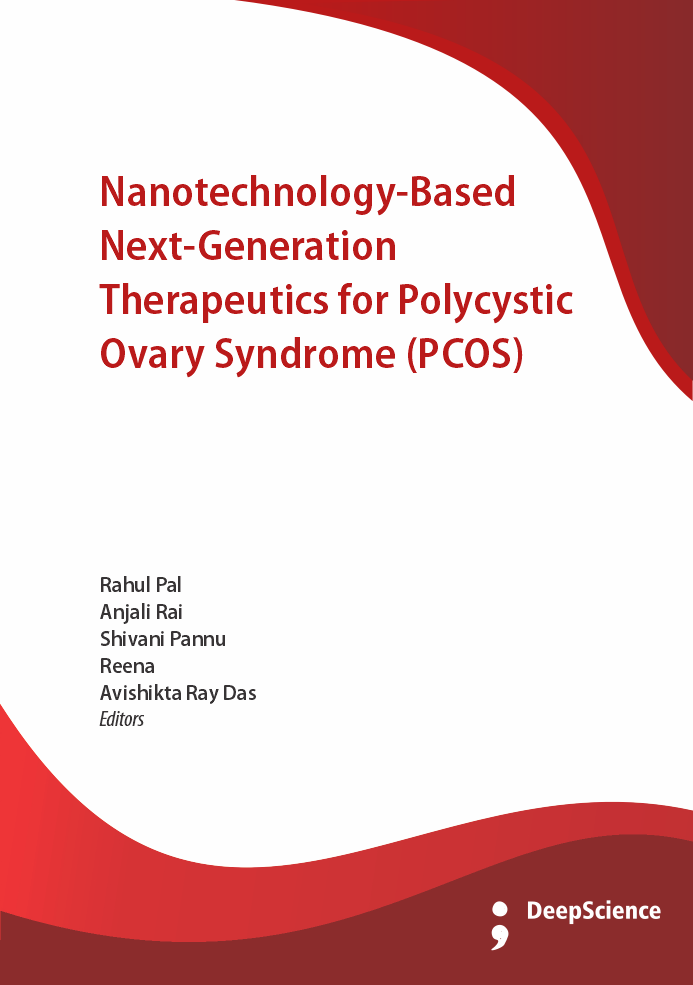
Exploring Nanotechnology With Traditional Herbal Pharmacology: Nano Carrier-Based Phytochemical Delivery In PCOS Treatment
Synopsis
Polycystic Ovary Syndrome (PCOS) is an important endocrine and metabolic disorder that affects women in their reproductive years. It is characterized by the increase in male hormones, no ovulation, and the formation of many cysts in the ovaries. Standard treatment consists of using oral contraceptives, insulin sensitizers and anti-androgens, among others, which only manage the symptoms and not the underlying causes, besides, they usually have negative side effects and their long-term efficacy is often limited. Moreover, they usually come up with side effects and have limited effectiveness in the long run. On the other hand, the work of bioactive phytochemicals, including flavonoids, polyphenols, alkaloids, terpenoids, and saponins, has provided the hope in the area of treating the disease because they can restore the endocrine system's control, lower the oxidative stress, and enhance the insulin sensitivity. The recent developments in nanocarrier systems, such as polymeric nanoparticles and antibody-conjugated formulations, are having a beneficial impact on the stability, bioavailability, and targeted delivery of the phytochemicals. Furthermore, the understanding of modulation of gut microbiota, functional genomics, and proteomic interactions has paved the way for new therapeutic pathways in the management of PCOS. This chapter presents a discussion on the technical challenges in the usage of nanotechnology and phytochemistry, the translational challenges, and the future of PCOS therapies that are safe, effective, and precision-based.
Downloads
Pages
49-78
Published
15 July 2025
Copyright (c) 2025 Mr. Rahul Pal (Young Scientist), Ms. Anjali Rai, Ms. Shivani Pannu, Km. Reena, Dr. Avishikta Ray Das; Jhilli Basu, Jyoti Devi, Diksha Chauhan, Priya Jaswal, Binita Ghosh, Shantanu Prajapati, Sushant Mouraya, Sneha Patil, Nikhil Rajnani, Monal Jain, Nalini Kurup , Ranjan Kumar Singh, Komal Sharma, Mantun Prasad Gupta, Ravikant, Mahesh Singh Rajpurohit, Vaibhav Saxena, Ajay Garg, Raman Kumari, Priyanka Rani, Kamal Kumar Daal, Sami Ahmad, Sneha Chauhan, Sheelendra Kumar, Hemant Sharma, Rishabh Gupta, Shweta Singh, Tanuja, Harsh Goswami, Abhishek Tyagi, Sonal Sharma, Subhanshi Vishwas, Sami Ahmad, Kamal Kumar Daal, Divyansh Bhatnagar, Rishabh Gupta, Shweta Singh, Vandna Tiwari, Subhanshi Vishwas, Shivang Shukla, Sushant M. Ahire, Prerana S. Pawar, Shivraj P. Jadhav, Vijay V. Shewale, Chandrashekhar D. Patil, Sunil K. Mahajan, Subhanshi Vishwas
How to Cite
Singh, R. K. ., Sharma, K. ., Gupta, M. P. ., Ravikant, Rajpurohit, M. S. ., Saxena, V., & Garg, A. . (2025). Exploring Nanotechnology With Traditional Herbal Pharmacology: Nano Carrier-Based Phytochemical Delivery In PCOS Treatment . In R. Pal, A. Rai, S. . Pannu, Reena, & A. R. . Das (Eds.), Nanotechnology NextGen: From Treatment to Transformation in Polycystic Ovary Syndrome (PCOS) (pp. 49-78). Deep Science Publishing. https://doi.org/10.70593/978-93-7185-087-2_3
Download Citation






 WhatsApp +91 7977171947