

Human–Machine Collaboration and Ethical Considerations in Smart Mobility
Synopsis
Market dynamics propelling the research, engineering, and development of smart mobility solutions are fuelled to a large extent by the convergence of control technologies, algorithms, information and communication technologies, data collection and processing capabilities, levels of investment, and population density. Yet it is undeniable that these same aspects can enable beneficial human–machine collaboration, multi-purpose use that is adaptive to changing needs, and support for regulators and policy-makers who wish to impose frameworks for the careful deployment of these technologies.
Automated systems are not confined to providing opportunities for a lack of human agency. While humans typically act in the role of command-and-control operators, smart mobility proposes a different structure in which humans are engaged in the creative design of systems that are logically constructed by amalgamating many algorithms that have a deeper and more narrow capacity, and yet with little or no situational awareness. Intelligent machines, built to a level of safety required to venture beyond research in purely test conditions, are at a stage where they can provide safety and comfort for drivers, and receive the behaviours of normal human agents when used.
Downloads
Pages
151-166
Published
15 November 2025
Copyright (c) 2025 Rama Chandra Rao Nampalli
How to Cite
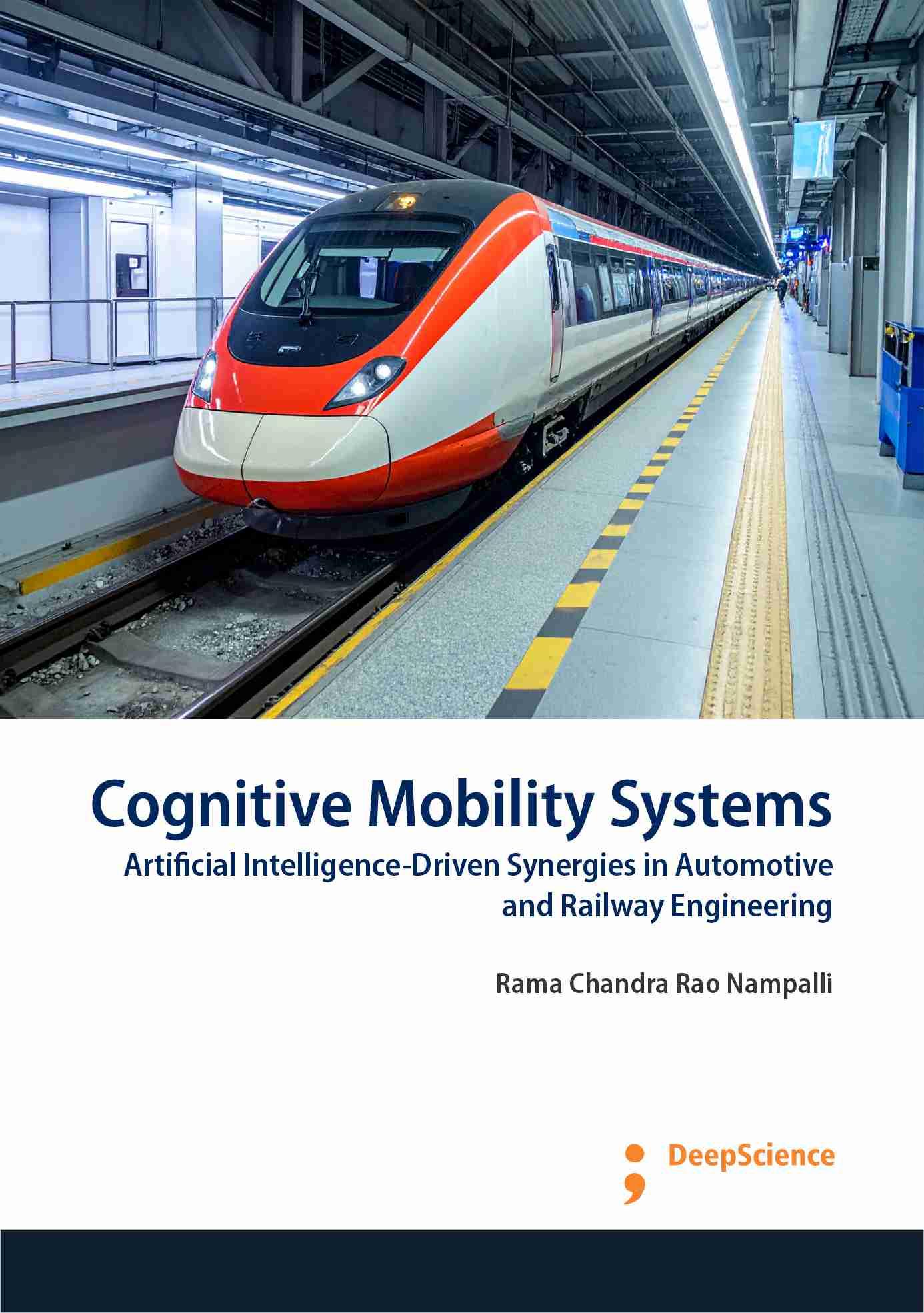
Nampalli, R. C. R. . (2025). Human–Machine Collaboration and Ethical Considerations in Smart Mobility. In Cognitive Mobility Systems: Artificial Intelligence-Driven Synergies in Automotive and Railway Engineering (pp. 151-166). Deep Science Publishing. https://doi.org/10.70593/978-93-7185-139-8_10
Download Citation








 WhatsApp +91 7977171947