

Intelligent Automotive Manufacturing: From Automation to Autonomy
Synopsis
Capable systems that can make their own decisions will change the automotive manufacturing process from advanced automation to autonomous production. Intelligent systems and a digital data-driven environment enable consideration of multiple objectives and fast analysis of large amounts of data. By redistributing data-collection and decision-making capabilities to the periphery of the manufacturing environment, the intelligent systems that manage a factory can expand their own decision-making horizons. After operations involving higher-level decisions—such as scheduling and quality assurance—are explored, the concept of autonomous cell production is examined, focusing primarily on the level of data, action planning, environment status, task flow, team interactions, and collaborative safety conditions for human workers.
Increasingly capable sensors, controllers, and on-machine and on-robot intelligence are enabling the autonomous development of production cells and their broad self-organization. Autonomous production cells carry different safety requirements compared with ordinary robotic cells. Safety-relevant signals must capture close collaboration between robots and human workers and ensure a safe environment at all times. OSH standards need to be supplemented with new risk-reduction concepts and workflows that support risk assessments throughout the collaborativerobots life cycle. As aspects of autonomous cars and trucks are introduced into manufacturing, advanced optimization methods in the scheduling and quality-assurance areas consider redundancy within workgroups, the status of the surrounding environment, context factors, intragroup tasks, process-analysis results, and the flow of work orders.
Downloads
Pages
33-50
Published
15 November 2025
Copyright (c) 2025 Rama Chandra Rao Nampalli
How to Cite
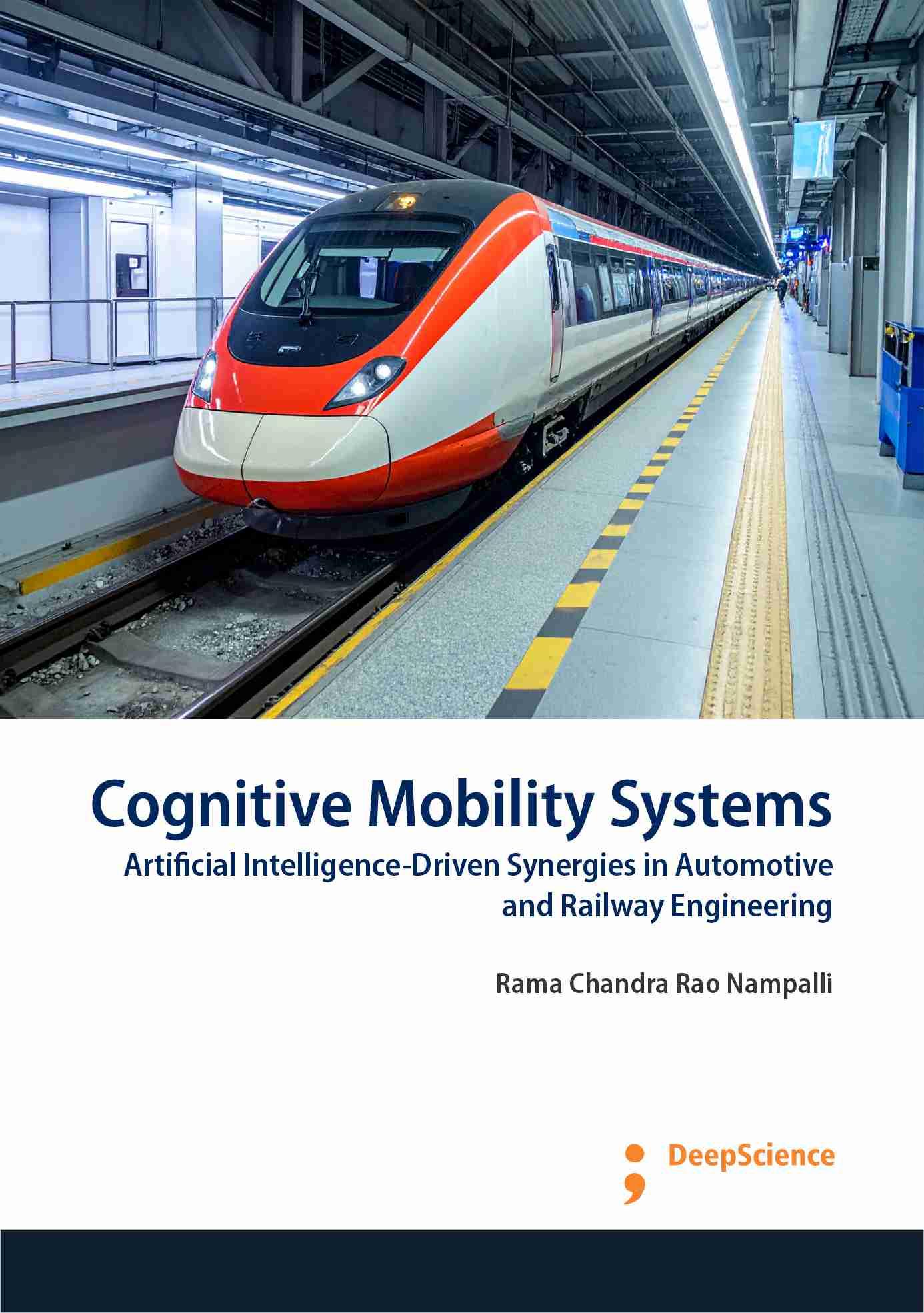
Nampalli, R. C. R. . (2025). Intelligent Automotive Manufacturing: From Automation to Autonomy. In Cognitive Mobility Systems: Artificial Intelligence-Driven Synergies in Automotive and Railway Engineering (pp. 33-50). Deep Science Publishing. https://doi.org/10.70593/978-93-7185-139-8_3
Download Citation







 WhatsApp +91 7977171947