

Introduction to Cognitive Mobility Systems
Synopsis
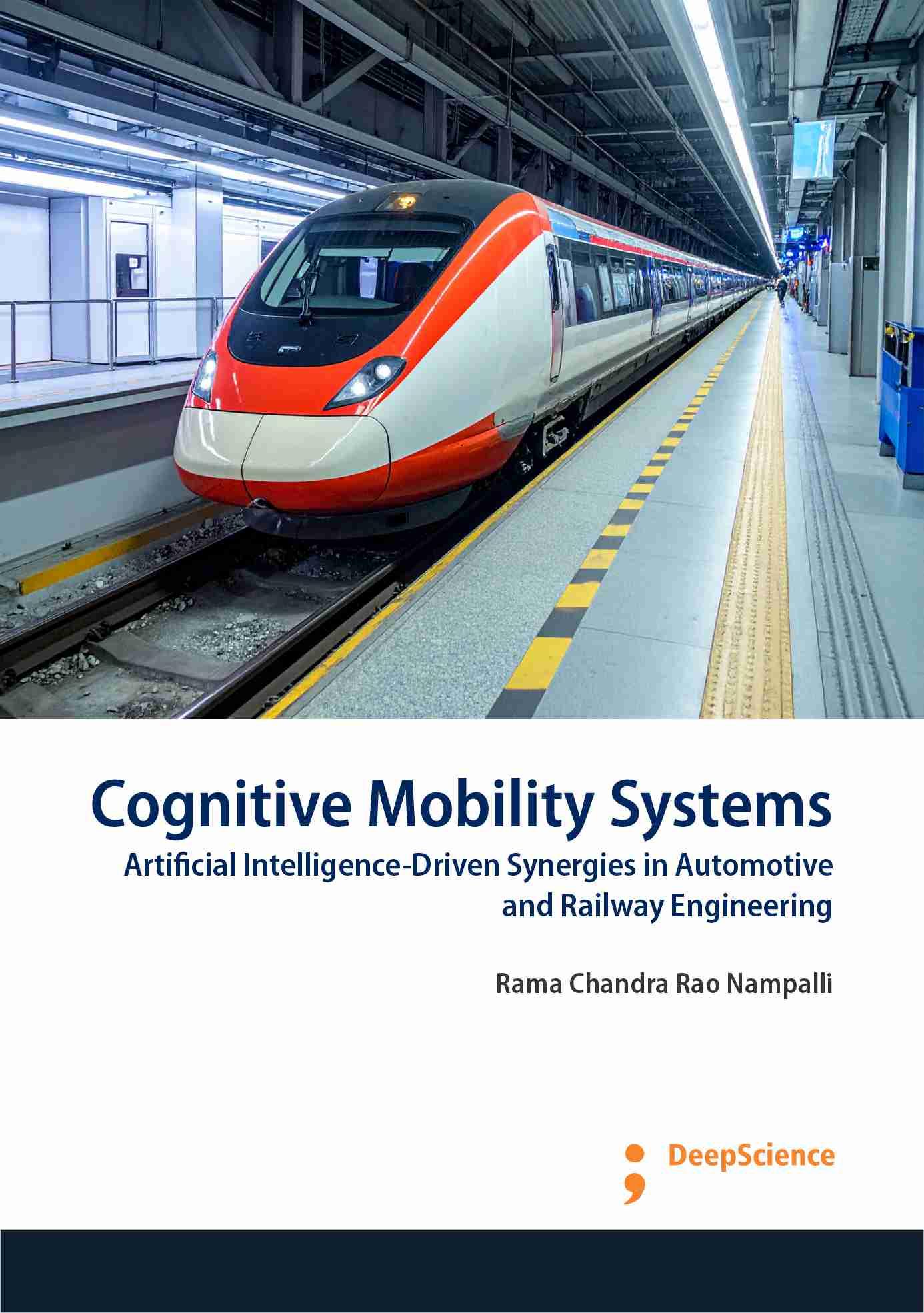
Cognitive mobility systems are intelligent platforms capable of understanding and responding to dynamic environments and unexpected events. The mobility domain comprises a wide range of systems, including unmanned aerial vehicles, autonomous cars, and mobile robotic platforms. Leveraging advances in cognitive systems, the definition can further be qualified to cognitive mobility systems. Systems in this category exhibit some or all of the following characteristics: they understand surrounding environments by adopting a human-like perception approach, considering both low-level sensory data and high-level knowledge base, and they recognize and process uncertain, unreliable, or incomplete information. They achieve goals (both high- and low-level) instead of merely following predefined routes through a basic planning and control ability. They also adapt and learn from experience by modifying behavior toward improved performance using prior knowledge, reinforcement, or imitation methods. Furthermore, they assist users in performing mobility tasks by acting either like a trusted collaborator and adviser or like an interpretable and controllable automator.
Downloads
Pages
1-17
Published
15 November 2025
Copyright (c) 2025 Rama Chandra Rao Nampalli
How to Cite
Nampalli, R. C. R. . (2025). Introduction to Cognitive Mobility Systems . In Cognitive Mobility Systems: Artificial Intelligence-Driven Synergies in Automotive and Railway Engineering (pp. 1-17). Deep Science Publishing. https://doi.org/10.70593/978-93-7185-139-8_1
Download Citation









 WhatsApp +91 7977171947