

Sustainable catalytic protocols for the synthesis of biologically active heterocyclic compounds
Synopsis
Advancement of sustainable catalytic protocols in the synthesis of heterocyclic compound has transformed modern chemistry, offering efficient, environmental friendly alternatives to conventional synthetic methodologies. This chapter delves into the principles of sustainable chemistry as applied to synthesis of heterocycle compounds, focusing on catalytic developments that reduce waste, improve atom economy, and minimize reliance on hazardous reagents. Heterogeneous catalytic protocols enhance recyclability and operational efficiency. Enzymatic catalysis presented unique opportunities for development of high stereo- and regioselectivity under normal conditions, advancement of the field toward more sustainable and biocompatible synthetic protocols. Additionally, mechanochemical and solvent-free reaction protocols provide promising strategy for reducing environmental toxicity and energy consumption, followed by green chemistry principles, highlight the role of sustainable catalysis in the synthesis of heterocyclic compounds. The convergence of experimental development further redefines catalytic design and reaction optimization, ensuring the sustainable evolution for the synthesis of heterocyclic compounds. This chapter will continue the exploration of sustainable synthetic protocols, emphasizing their vital contributions to heterocyclic chemistry and the broader pharmaceutical industry. Through interdisciplinary collaborations and technological innovations, sustainable catalytic protocols will continue to enhance the efficiency, cost-effectiveness, and ecological viability for the synthesis of heterocyclic compounds, paving the way for greener pharmaceuticals and a more sustainable future.
Downloads
Volume
Pages
128-149
Published
14 November 2025
Copyright (c) 2025 T R Swaroop; Anupama Anjali , Swadhin Swaraj Acharya, Bibhuti Bhusan Parida, Ram Singh Jat, M. Bhanuchandra, Anjali Sharma, Rajib Panchadhayee, Aminul Islam, Pranab Ghosh, Nithesh Kumar Krishnan, Harini Bhagyaraj, Esakkimuthu Shanmugasundaram, Vikash Kumar Sonu, Apoorv Saraswat, Ani Deepthi, Sruthi S. L.; Devika Krishnan; Rajaghatta N Suresh, Kempegowda Mantelingu, Toreshettahally R Swaroop, Kanchugarakoppal S Rangappa, M Sarasija, Vijaya Lakshmi , Ramchandra Thorat, Owais Mujawar, Ram Chandra Maji, Stalin Thambusamy
How to Cite
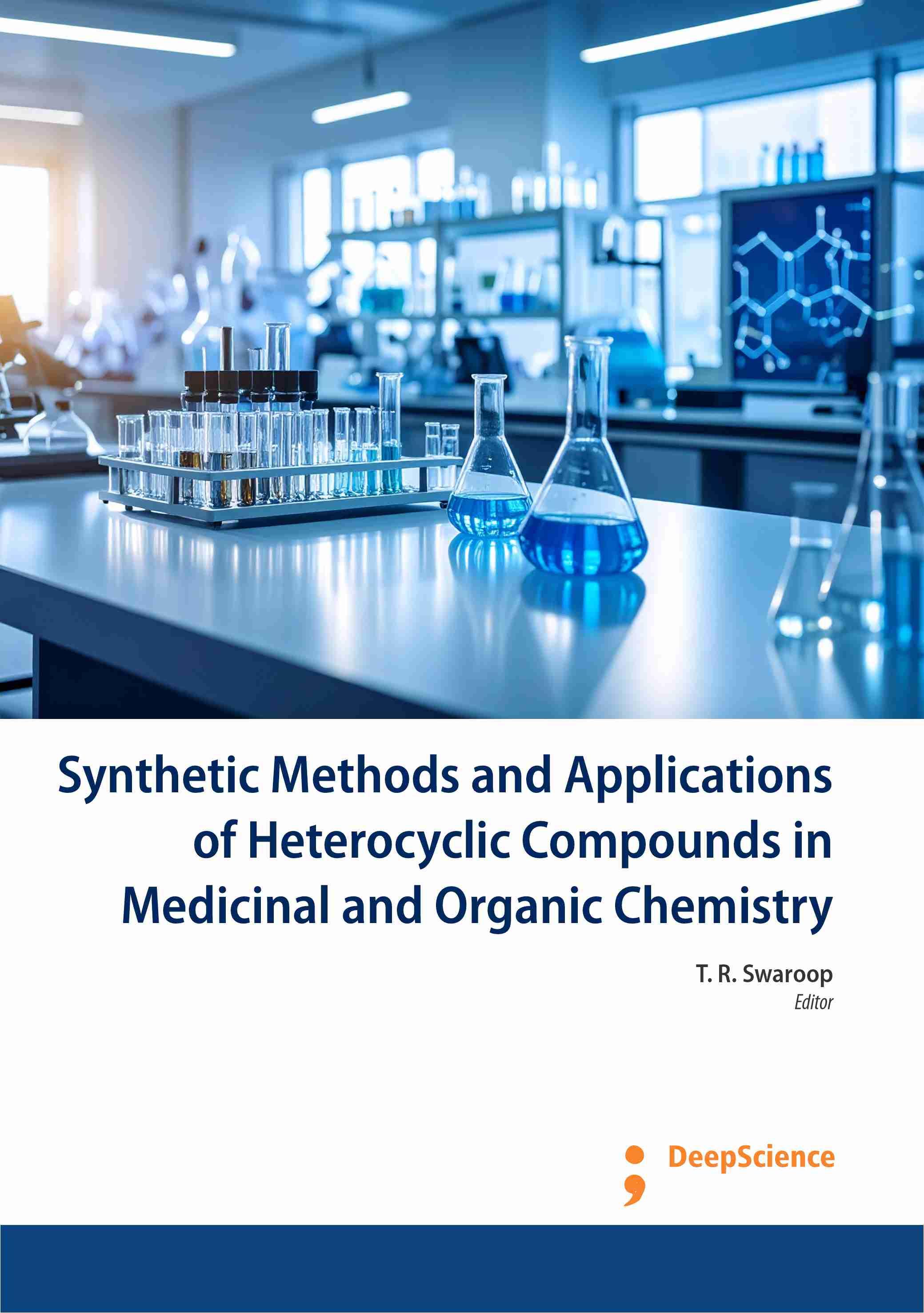
Islam, A. ., & Ghosh, P. . (2025). Sustainable catalytic protocols for the synthesis of biologically active heterocyclic compounds . In T. R. Swaroop (Ed.), Synthetic Methods and Applications of Heterocyclic Compounds in Medicinal and Organic Chemistry (pp. 128-149). Deep Science Publishing. https://doi.org/10.70593/978-93-7185-164-0_10
Download Citation





 WhatsApp +91 7977171947