

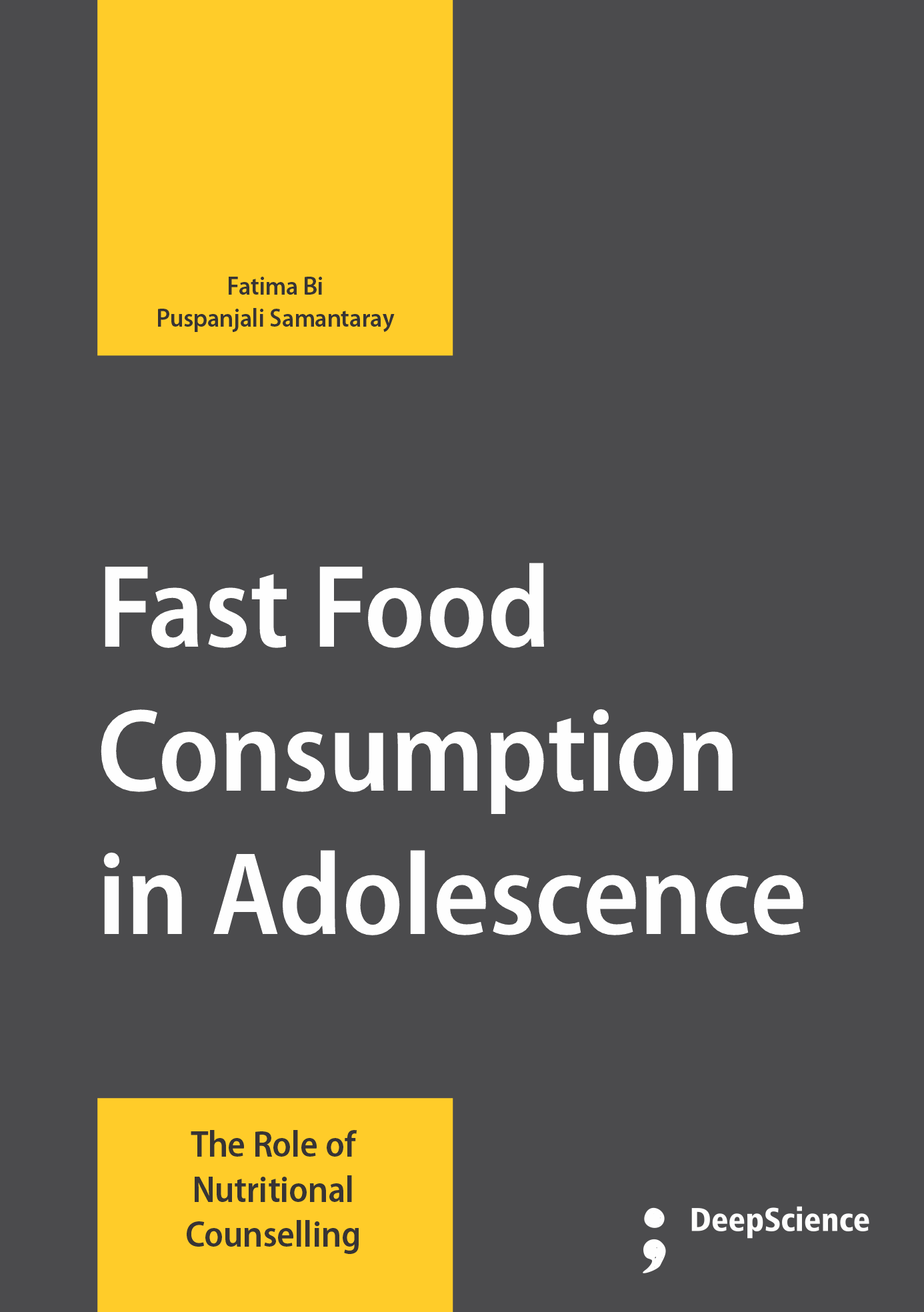
Fast Food Consumption in Adolescence: The Role of Nutritional Counselling
##plugins.pubIds.doi.readerDisplayName##
https://doi.org/10.70593/978-93-7185-405-4
Keywords:
Fast Food, Adolescence, Nutritional Counselling, Heath, Fat, Salt, SugarSynopsis
Good health can be described as an objective state of health, which is both physical, mental and social. Healthy mind, body and spirit are the pillars of complete wellness and food therapy is becoming one of the effective means of prevention of many diseases associated with lifestyle. This has been intensely experienced in the current world characterized by fast urbanization, modernization and westernization which have highly affected dietary habits. Consequently, consumption of fast food has been a norm not only in India but also in other places all over the world.
Fast foods also known as Junk foods are the foods, which are simple to make, simple to eat, and taste good but they are usually unhealthy. These foods contain high fat, salt, sugar and calorie levels and have low levels of the essential nutrients. The use of junk food in India is gradually being substituted by the name HFSS foods (Foods High in Fat, Salt, and Sugar). The traditional healthy and nutritious foods have been replaced by the junk foods due to their convenience, taste, appealing nature, and affordability in the day to day food of most people, particularly the adolescents. Therefore, its slogan is Eat healthy & Live healthy, which allows highlighting the need to eat healthy to prevent and keep good health.
Fast foods are usually prepared using artificial food colors, food taste enhancers like Chinese salt (monosodium glutamate), and other food additives that are added to improve the taste and appearance. Nevertheless, teenagers mostly do not know about the negative impact of such substances. Adolescents have a tendency to take fast foods due to peer influence, individual tastes and preferences, exposure to media and easy access. Adolescence is a very important phase in life, which is associated with a high rate of growth and development, and proper nutrition plays a vital role to avoid deficiency of nutrients and the presence of optimal health.
Unhealthy eating habits in adolescence have the potential to have harmful impact on physical, psychological and health results in the long run. The high frequency of junk food and skipping of meals are the main causes of risk factors of undernutrition, obesity, and micronutrient deficiencies, as well as lifestyle diseases including hypertension, diabetes, cardiovascular diseases, and other metabolic disorders. Teenagers are also likely to fulfill their hunger by eating readily available foodstuffs in school canteens as well as street food by local street food sellers, which is again a contributor to poor eating habits.
The current research investigation will help to determine the current level of fast food consumption, general patterns of eating, nutritional awareness, and health issues linked to fast food consumption in adolescents. The paper also analyzes the socio-demographic characteristics of the staff members of the street food, food handling and hygiene practices and provides microbiological analysis of selected food items in order to assess food safety.
The intervention of nutrition counseling, based on the necessity of the balanced diet and negative impact of junk food consumption, can become crucial in decreasing the level of fast food intake and enhancing the nutritional level of teenagers.
This paper will be divided into five chapters. Chapter one is concerned with the introduction of the study, reasons and consequences of using fast foods, research aims and importance. In chapter two, the appropriate literature is reviewed. Chapter three provides the methodology to be used in the study. The fourth chapter will contain the data analysis and interpretation of results in accordance with the study objectives and hypotheses. The fifth chapter is the concluding chapter of the study where critical findings, conclusions and recommendations are given.
References
Abbas, S., Naz, M., Gillani, S. M. A., Afzal, S., Jabeen, N., & Manzoor, A. (2022). Analyze the Effects of Fast Food on the Health of College Going Students. Pakistan Journal of Medical & Health Sciences, 16(02), 1053-1053. Abraham, S., Martinez, M., Salas, G., & Smith, J. (2018). College student’s perception of risk factors related to fast food consumption and their eating habits. Journal of Nutrition and Human Health, 2(1). Akabanda, F., Hlortsi, E. H., & Owusu-Kwarteng, J. (2017). Food safety knowledge, attitudes and practices of institutional food-handlers in Ghana. BMC public health, 17, 1-9. Al-Mamun, A., Debnath, P., Siddika, F., & Islam, M. J. (2019). Knowledge of food habit and other daily habit are the determinants of health status: A study among the students of Chattogram regions. Asian Journal of Health Sciences, 5(2), 10-10. Altekruse, S. F., Street, D. A., Fein, S. B., & Levy, A. S. (1996). Consumer knowledge of food borne microbial hazards and food-handling practices. Journal of food protection, 59(3), 287-294.
Downloads
Published
3 February 2026
Copyright (c) 2026 Fatima Bi, Puspanjali Samantaray
Details about the available publication format: E-Book
E-Book
ISBN-13 (15)
978-93-7185-405-4
Details about the available publication format: Book (Paperback)
Book (Paperback)
ISBN-13 (15)
978-93-7185-579-2
How to Cite
Bi, . F. ., & Samantaray, P. . (2026). Fast Food Consumption in Adolescence: The Role of Nutritional Counselling. Deep Science Publishing. https://doi.org/10.70593/978-93-7185-405-4
Download Citation







 WhatsApp +91 7977171947