

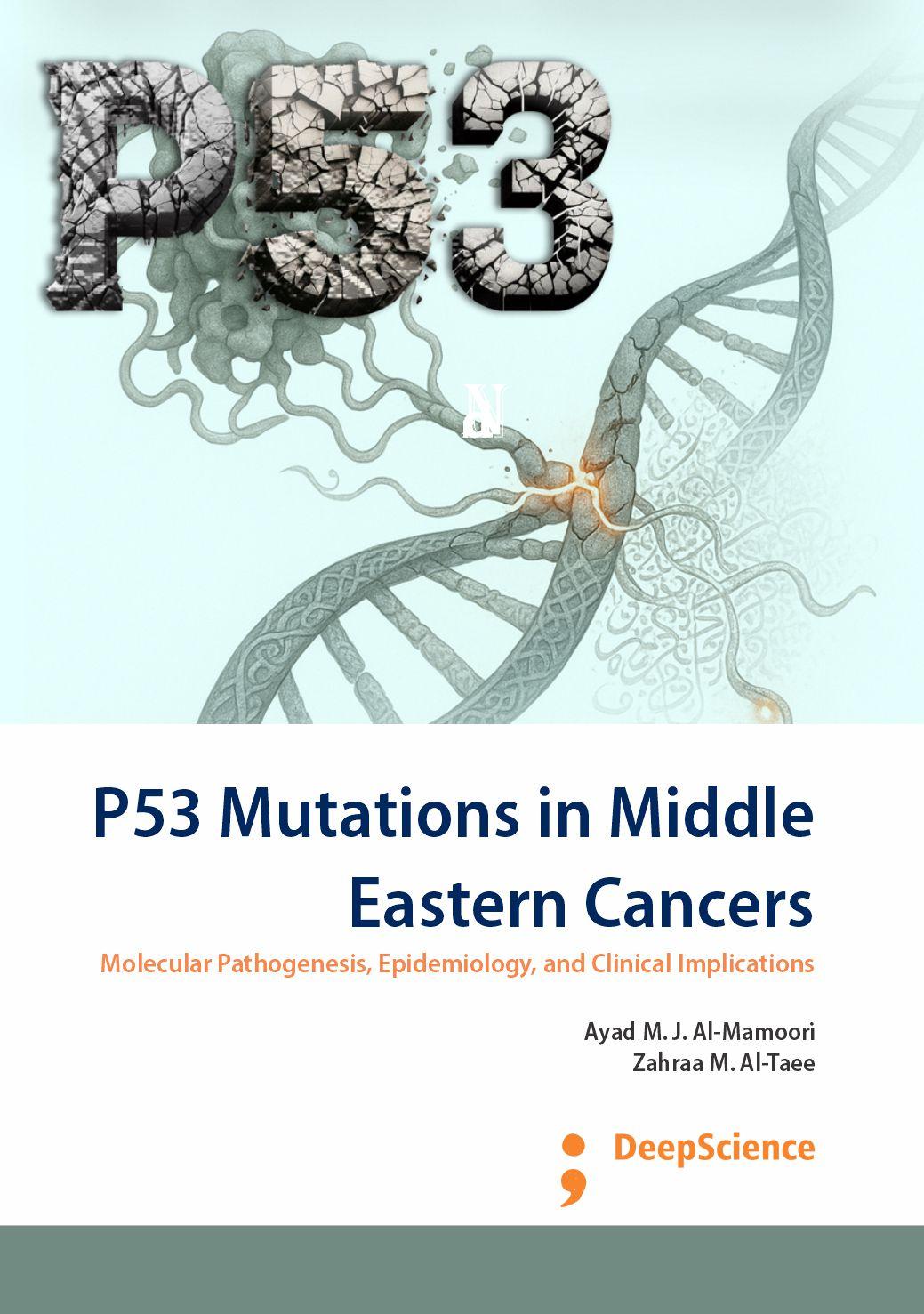
P53 Mutations in Middle Eastern Cancers: Molecular Pathogenesis, Epidemiology, and Clinical Implications
##plugins.pubIds.doi.readerDisplayName##
https://doi.org/10.70593/978-93-7185-015-5
Keywords:
P53 Mutations, Cancer, Molecular Pathogenesis , Epidemiology, Clinical Medicine, Diagnostics, HealthcareSynopsis
Over recent decades, cancer biology has undergone a significant transformation, but very few molecules have received more attention from scientists than p53, which is commonly referred to as the ‘guardian of the genome’. This fascinating protein represents both the intersection between cellular life and death through its role in protecting the genome from the effects of ongoing extrinsic and intrinsic stressors and is arguably one of the most important proteins to maintain genomic integrity through mediation of cell survival. TP53 is not just an example of molecular regulation; the story of this gene typifies the complex nature of cancer, multifaceted and heavily impacted by genetic, environmental and sociocultural factors.
The objective for writing this book was to combine worldwide understanding regarding the nature of p53 biology with specific emphasis on understanding how p53 relates to the region of the Middle East. Although mutations within TP53 have been widely recognised as the primary contributing factor to tumour formation, recent findings indicate that there are differences in the levels of TP53 mutations and their types and therefore their implications clinically, between populations. The molecular characteristics of the different populations are influenced by the range of genetic variance, patterns of consanguinity, exposure to environment, dietary shifts and the availability of quality health care. This collective effect must be investigated in an independent manner in order to understand the full impact of the molecular characteristics on the Middle Eastern population.
Through the next few chapters, we integrate basic molecular mechanisms with epidemiological data, regional studies and translational concepts. Evaluating TP53 globally and regionally will stimulate specific context-based research, support genomic medicine initiatives, and stimulate efforts among scientists, clinicians and policy-makers to collaborate.
Learning about p53 is more than an intellectual exercise; it elucidates a route to greater accuracy of diagnosis, individualized therapy, and better outcomes for cancer patients. This book seeks to illuminate the involvement of TP53 in the Middle East for the benefit of both regional and global initiatives that advance the field of precision oncology.
References
Abdel-Rahman, O. (2018). Exploring the status of cancer care in the Middle East region. Expert Review of Pharmacoeconomics & Outcomes Research, 18(5), 477-481.
Al-Madouj, A., Eldali, A., & Al-Zahrani, A. (2020). Ten-year cancer incidence among nationals of the Gulf Cooperation Council States, 1998–2007. Gulf Journal of Oncology, 1(30), 13-21.
Al-Qasem, A., Tang, N., Lu, Q., & Al-Nuaim, A. (2018). TP53 mutation spectrum in Saudi breast cancer patients. BMC Cancer, 18(1), 720.
Bazarbashi, S., Al Eid, H., & Minguet, J. (2021). Cancer incidence in Saudi Arabia: 2020 update. Saudi Medical Journal, 42(5), 458-464.
Babamohamadi, M., Babaei, E., Ahmed Salih, B., Babamohammadi, M., Jalal Azeez, H. and Othman, G., 2022. Recent findings on the role of wild-type and mutant p53 in cancer development and therapy. Frontiers in Molecular Biosciences, 9, p.903075.
Chen, X. et al. (2022) 'Mutant p53 in cancer: from molecular mechanism to therapeutic modulation,' Cell Death and Disease, 13(11). https://doi.org/10.1038/s41419-022-05408-1.
Donehower, L. A., Soussi, T., Korkut, A., Liu, Y., Schultz, A., Cardenas, M., & Wheeler, D. A. (2019). Integrated analysis of TP53 gene and pathway alterations in cancer. Cell Reports, 28(5), 1370-1384.
Downloads
Published
28 February 2026
Copyright (c) 2026 Ayad M.J. Al-Mamoori, Zahraa M. Al-Taee
Details about the available publication format: E-Book
E-Book
ISBN-13 (15)
978-93-7185-015-5
Details about the available publication format: Book (Paperback)
Book (Paperback)
ISBN-13 (15)
978-93-7185-349-1
How to Cite
Al-Mamoori, A. M., & Al-Taee, Z. M. . (2026). P53 Mutations in Middle Eastern Cancers: Molecular Pathogenesis, Epidemiology, and Clinical Implications. Deep Science Publishing. https://doi.org/10.70593/978-93-7185-015-5
Download Citation







 WhatsApp +91 7977171947