

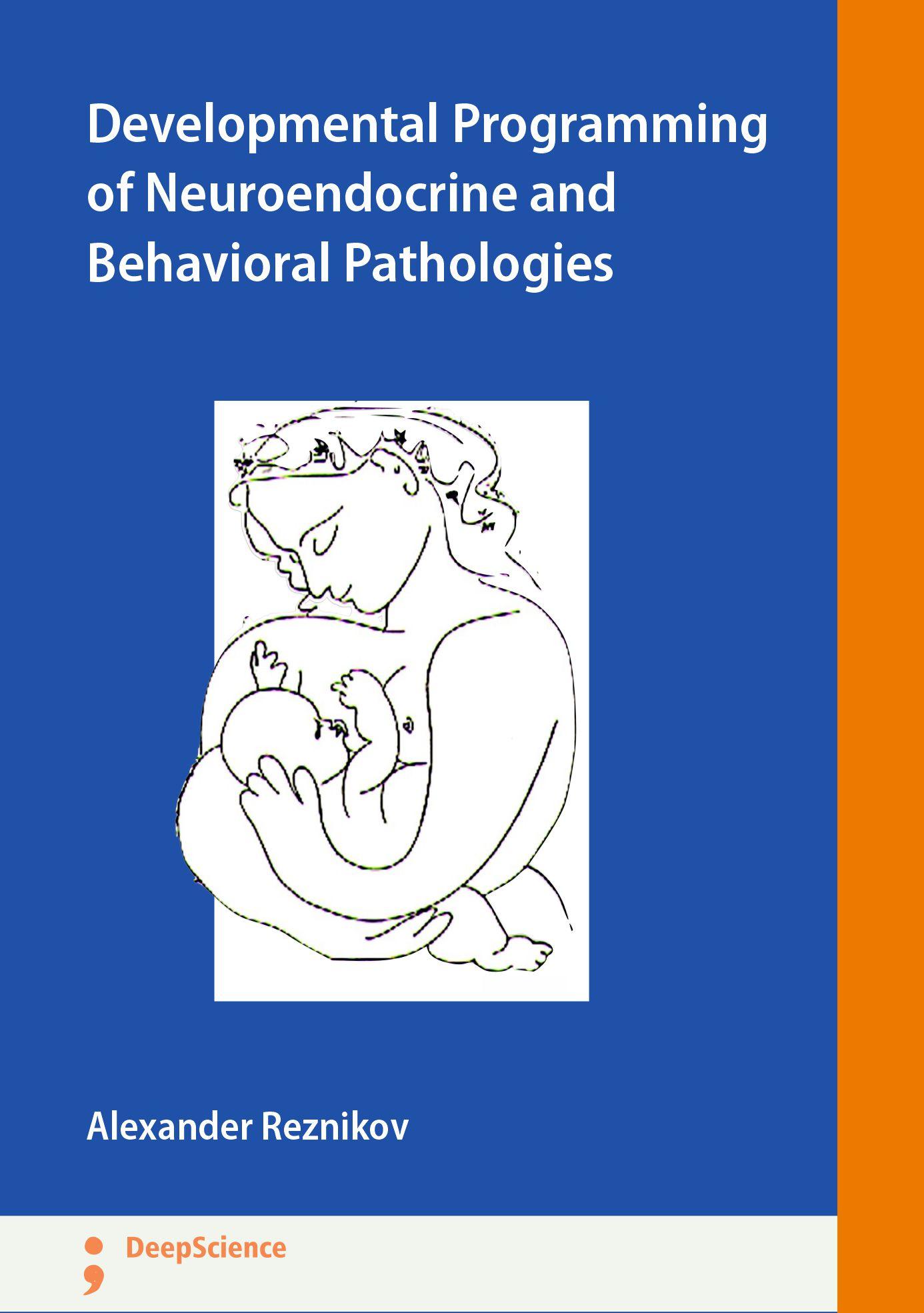
Developmental Programming of Neuroendocrine and Behavioral Pathologies
##plugins.pubIds.doi.readerDisplayName##
https://doi.org/10.70593/978-93-7185-586-0
Keywords:
Neuroendocrine, Pathology, Behavioral Pathologies, Epigenetic Programming, Prenatal Stress, Neuroendocrine SystemSynopsis
This monograph addresses a critical domain of contemporary medical science—functional teratology, the study of predominantly functional disorders in the offspring of mothers exposed to adverse exogenous or endogenous influences during pregnancy or other vulnerable stages of early postnatal development. Such disruptions may remain latent at birth yet manifest later in life as chronic physiological or behavioral pathologies. Research in this field is inherently multidisciplinary, integrating physiology, pathophysiology, endocrinology, psychology, obstetrics and gynecology, as well as internal medicine.
It is now well recognized that the absence of overt teratogenic abnormalities in the newborn does not ensure a normal trajectory of subsequent development and health. This is especially pertinent for the neuroendocrine system, metabolic regulation, behavior, adaptive responses to homeostatic challenges, endocrine gland function, reproductive health, and immune competency. When such disorders become evident only in adulthood, reconstructing the maternal conditions during pregnancy and identifying the likely etiological factors is exceedingly difficult. Experimental studies in animals with relatively short life spans (rats, mice, hamsters) therefore provide a valuable opportunity to model early-life exposure to adverse influences and to assess their consequences for offspring health.
The first and second trimesters of human pregnancy are considered the most sensitive periods for intrauterine development. The first trimester is characterized by embryonic morphogenesis, whereas the second is marked by the maturation of the fetus’s regulatory physiological systems, particularly the neuroendocrine system. One of the most critical processes occurring during this developmental window is the sexual differentiation of the brain, which programs sex-specific behavioral patterns, neuroendocrine regulation of gonadal function, and responses to stress.
Taking these considerations into account, the author and collaborators focused their research primarily on the final week of gestation in rats and, in some cases, on the first postnatal week. This strategy is justified by the fact that, compared with humans, early ontogenesis in rodents is developmentally delayed, with maturation of the neuroendocrine system occurring largely during this period.
I wish to express my deep respect and sincere gratitude to my colleagues for their professionalism and their dedicated contributions to the development of the scientific field to which this monograph is devoted. Without their committed and productive efforts, the present work would not have been possible.
References
Abbott D.H., Dumesic D.A., & Franks S. (2002). Developmental origin of polycystic ovary syndrome - a hypothesis. J Endocrinol. 174(1), 1-5. doi: 10.1677/joe.0.1740001
Abbott D.H., Levine J.E., Dumesic P.A., Padmanabhan V., & Dumesic D.A. (2025). Polycystic ovary syndrome: origins and implications: gestational anti-müllerian hormone and testosterone excess combined with maternal adiposity program for polycystic ovary syndrome. Reproduction. 170(2), e250120. doi: 10.1530/REP-25-0120
Abdel-Maksoud F.M., Leasor K.R., Butzen K., Braden T.D., & Akingbemi B.T. (2015). Prenatal exposures of male rats to the environmental chemicals bisphenol A and di(2-ethylhexyl) phthalate impact the sexual differentiation process. Endocrinology. 156(12), 4672-4683. doi: 10.1210/en.2015-1077
Abramov A.V., Kolesnik Yu.M., & Tikhonovskaya M.A. (2004). State of glucose tolerance in males who have undergone chronic prenatal stress. Zaporozhye Med J. 6, 38-41(Russian)
Ahmad R., Verma Y., Gautam A.K., & Kumar S. (2015). Assessment of estrogenic potential of di-n-butyl phthalate and butyl benzyl phthalate in vivo. Toxicol Ind Health. 31(12), 1296-1303 doi: 10.1177/0748233713491803
Ahn C., & Jeung E.B. (2023). Endocrine-disrupting chemicals and disease endpoints. Int J Mol Sci. 24(6), 5342. doi: 10.3390/ijms24065342
Akingbemi B.T., Braden T.D., Kemppainen B.W., Hancock K.D., Sherrill J.D., Cook S.J., … & Supko J.G. (2007). Exposure to phytoestrogens in the perinatal period affects androgen secretion by testicular Leydig cells in the adult rat. Endocrinology. 148, 4475-88. doi: 10.1210/en.2007-0327
Almeida S.A., Petenusci S.O., Anselmo-Franci J.A., Rosa e Silva A.A., Carvalho T.L. (1998). Decreased spermatogenic and androgenic testicular functions in adult rats submitted to immobilization-induced stress from prepuberty. Braz J Med Biol Res. 31, 1443-1448. doi: 10.1590/s0100-879x1998001100013
Downloads
Published
22 February 2026
Copyright (c) 2026 Alexander Reznikov
Details about the available publication format: Book Preview
Book Preview
ISBN-13 (15)
978-93-7185-256-2
Details about the available publication format: E-Book
E-Book
ISBN-13 (15)
978-93-7185-586-0
How to Cite
Reznikov, A. . (2026). Developmental Programming of Neuroendocrine and Behavioral Pathologies. Deep Science Publishing. https://doi.org/10.70593/978-93-7185-586-0
Download Citation








 WhatsApp +91 7977171947