

Architecture Patterns for Adaptive Financial Systems
Synopsis
Adaptive finance encapsulates the increasingly volatile, uncertain, and complex financial landscape characterized by accelerated systemic risk, continually evolving regulatory landscapes, disruptive technologies, and changing consumer behaviors and preferences. The architecture of the financial systems underpinning adaptive finance has not matured at the same pace. Conventional methods of analyzing and designing large-scale business–IT systems have provided only partial solutions. Architecture remains rigid, requiring years of investment and effort to change even at the most fundamental levels. By the time the architecture changes, the opportunities may be lost. New capabilities are added and changed with increasing frequency, yet the risk of introducing problems also increases with the density and speed of change. An infrastructure designed to cope with volatility by scaling up resources may not suffice when faced with demand for completely new features and services.
Unfortunately, financial institutions are still often perceived, both from the outside and the inside, as being more bureaucratic than agile. Most safety, reliability, and compliance regulations assume static, monolithic systems yet the risk of failure due to boredom and stagnation increases when capacity-addition projects take many months. Because such projects often change just a tiny fraction of the architecture they seldom garner the focus of heightened scrutiny. Rising vulnerability is frequently mitigated not by controlling scale, stability, and risk but instead by increased emphasis on SRE and Operational Excellence. The financial market space has all the nuanced complexities of an adaptive system without the supporting architecture. Work must be done both to enable such an architecture and to assure the security, compliance, and operational excellence that accompany such a radical approach to development.
Downloads
Pages
17-32
Published
12 February 2026
Copyright (c) 2026 Avinash Reddy Segireddy
How to Cite
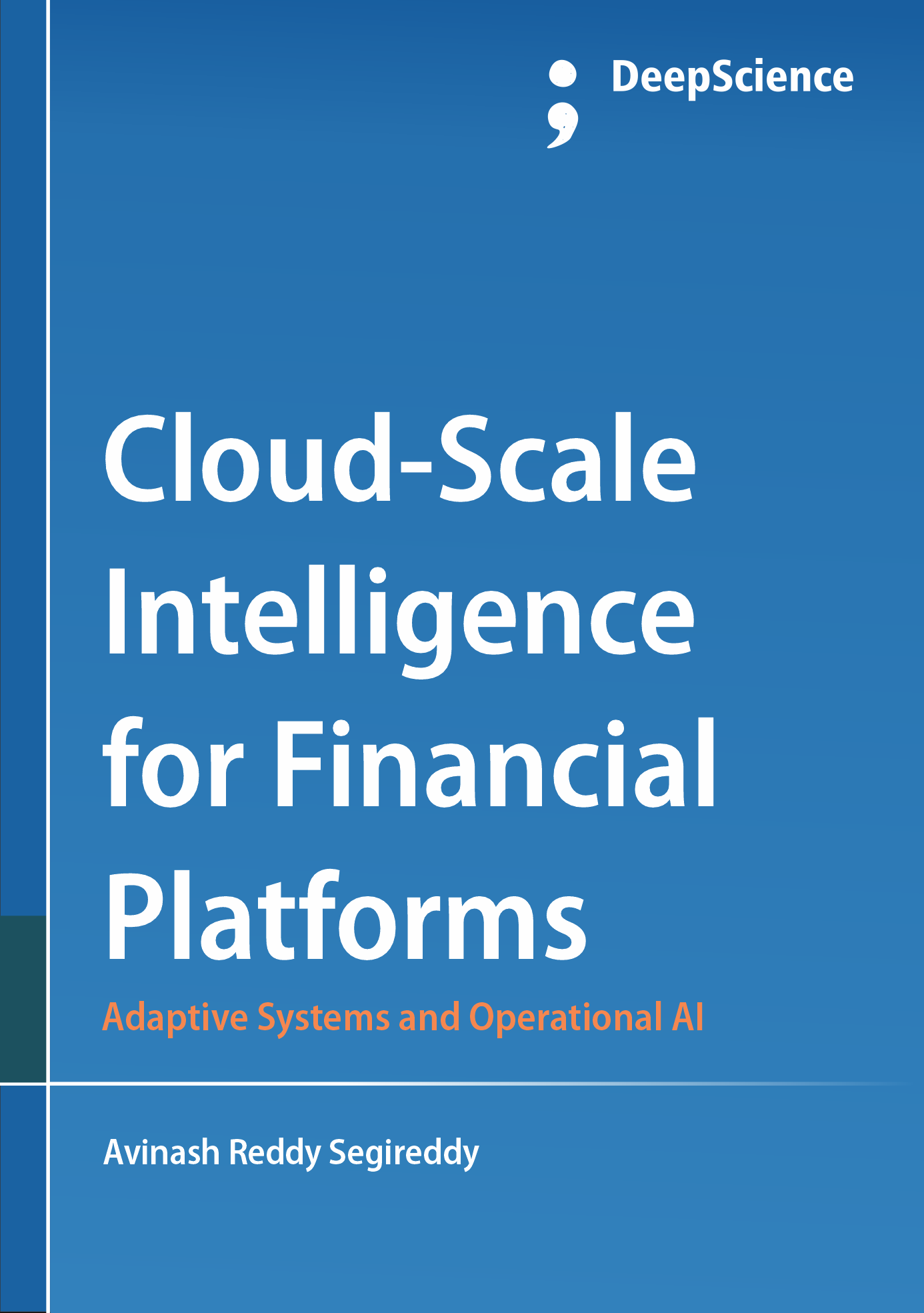
Segireddy, A. R. . (2026). Architecture Patterns for Adaptive Financial Systems. In Cloud-Scale Intelligence for Financial Platforms: Adaptive Systems and Operational Artificial Intelligence (pp. 17-32). Deep Science Publishing. https://doi.org/10.70593/978-93-7185-360-6_2
Download Citation









 WhatsApp +91 7977171947