

The AI Revolution in the Manufacturing Environment: A Comprehensive Analysis of Implementation, Impact, and Future Directions
Synopsis
The production industry is experiencing the most radical change ever since the invention of the assembly line due to the introduction of Artificial Intelligence (AI). Going beyond conventional automation, AI opens up cognitive possibilities whereby systems can learn on the data and respond to the changing environment and optimize complex tasks on their own. The article is a detailed investigation of the complex nature of AI in the contemporary manufacturing setting. It starts with the definition of the pillars of core technology in the industrial AI that are machine learning, computer vision and the new frontier of Generative AI and Physical AI. The article has then methodically explored the main application applications predictive maintenance, quality control, process optimization, supply chain resilience, human-robot collaboration, and generative design and presented the mechanisms and measurable advantages of each using real-world examples. This is followed by a critical analysis which discusses the major challenges that impede mass adoption which include lack of data infrastructure, talent and culture gap, complication of integration with existing systems, and the black box problem. By combining the findings of the recent industry whitepapers, scholarly work, and surveys across the globe, this article offers a four-pillar how-to guide to successful AI implementation, which focuses on strategic alignment, value-driven use cases, effective data governance, and workforce transformation. Lastly, it envisions the trends of the future such as the emergence of sovereign AI, maturity of context-aware robotics, and essential contribution of AI to enhancing sustainability. The conclusion is that the holistic and human-focused approach is more than just good but the key to manufacturers to reap the full potential of AI and gain a competitive edge in addition to surviving in the age of Industry 4.0.
Keywords: Artificial Intelligence, Smart Manufacturing, Predictive Maintenance, Quality Control, Supply Chain Optimization, Human-Robot Collaboration (HRC), Generative AI, Digital Twin, Industry 4.0, Implementation Framework, Data Governance, Workforce Upskilling.
Downloads
Pages
165-175
Published
29 December 2025
Copyright (c) 2025 Dhara Patel; Nandini Joshi, Vrusha Jani, Komal Rahevar, Arya Patel, Vaishali Sharma, Janvi Patel, Tejas Patel, Sofiya Patel, Harsh Shirke, Anand Yadav, Satyajit Sahoo, Prasanna Pradhan, Hemanshi Patadiya, Kunj Desai; Grishma Patel, Dhananjay Meshram; Kajal Chavda, Niyati Shah, Mamta Kumari, Chitrali Talele, Piyush Kumar Sadhu, Sushmita Patil, Mukesh Patel, Krushan Joshi
How to Cite
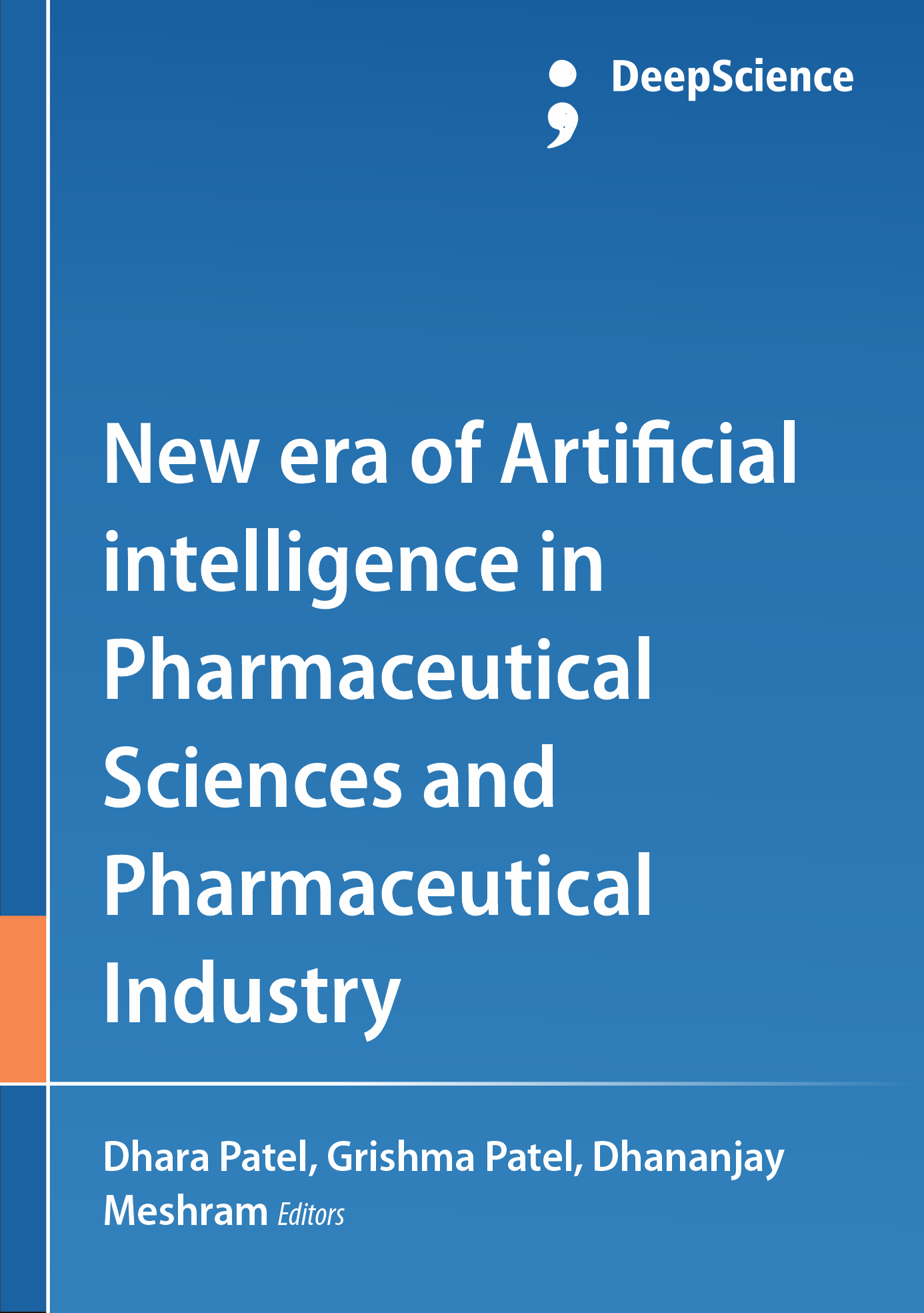
Rahevar, K., Patel, D., Patel, G. ., Patel, M., & Meshram, D. (2025). The AI Revolution in the Manufacturing Environment: A Comprehensive Analysis of Implementation, Impact, and Future Directions. In D. Patel, G. . Patel, & D. Meshram (Eds.), New era of Artificial intelligence in Pharmaceutical Sciences and Pharmaceutical Industry (pp. 165-175). Deep Science Publishing. https://doi.org/10.70593/978-93-7185-272-2_8
Download Citation








 WhatsApp +91 7977171947