
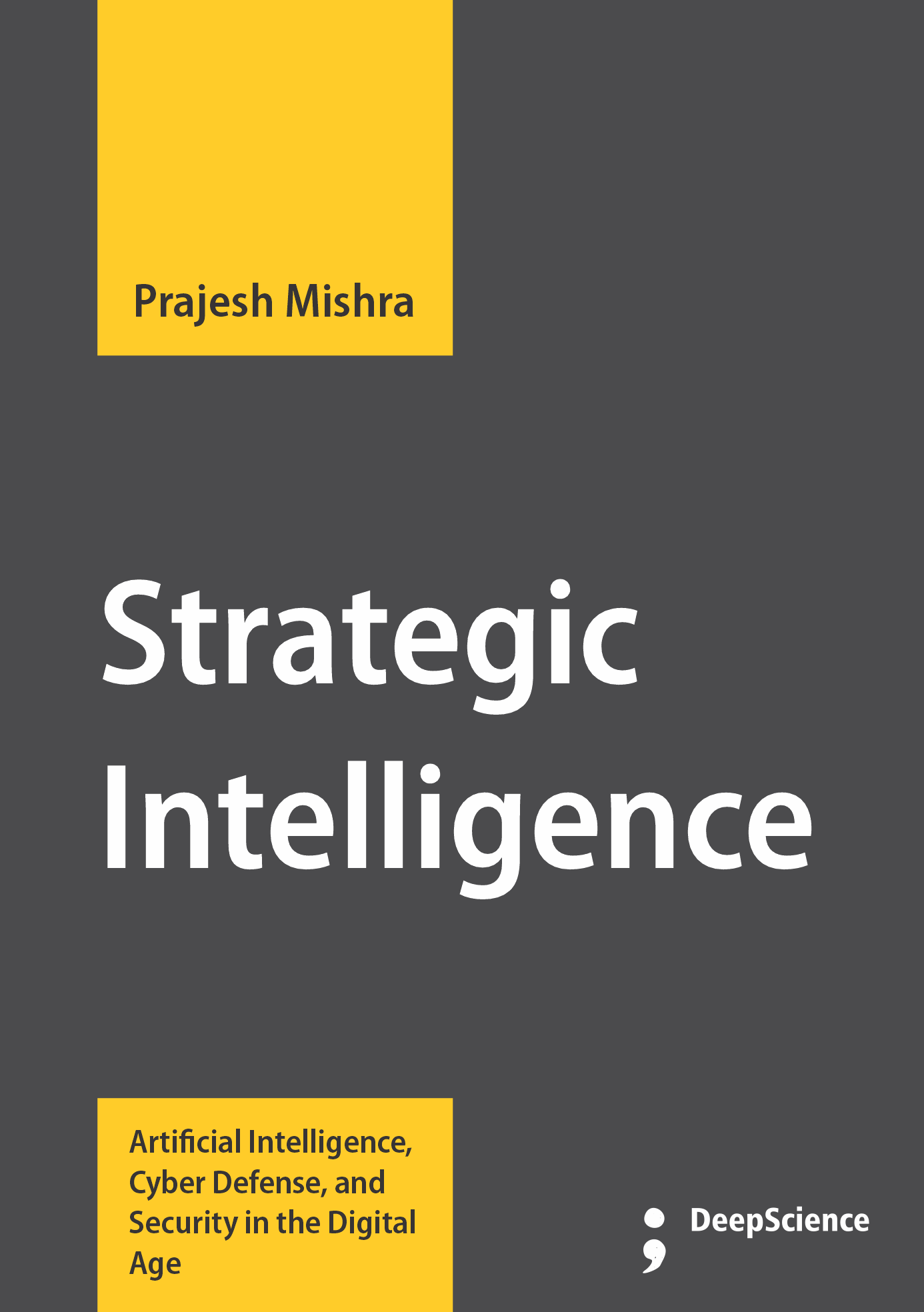
Strategic Intelligence: Artificial Intelligence, Cyber Defense, and Security in the Digital Age
##plugins.pubIds.doi.readerDisplayName##
https://doi.org/10.70593/978-93-7185-637-9
Keywords:
Artificial Intelligence, Cyber Defense, Cybersecurity, Digital-Twin, Cyber Threats, Ethical Challenges, EthicsSynopsis
The world has never witnessed the basis of national security to be redefined in ways that Artificial Intelligence is doing. Autonomous systems, real-time analytics and scalable cyber protection technologies used to take milliseconds to identify potential attacks that otherwise took full teams of human analysts to identify and process before confirming their presence and need intercession. To the United States, this change is a turning point as not only a turning point in technology, but also in strategy.
The book discusses the way in which AI is redefining contemporary conflict in the cyberspace, intelligence, infrastructure and geopolitics. It delves into the potential and the threat: self-policing AI able to pick up threats quicker than any mortal and antagonistic AI able to use the system vulnerabilities, faster and more extensively than ever before. The prospects of national defense are changing at an extremely fast pace along with deepfakes and misinformation to digital-twin cybersecurity and autonomous battlefield systems.
Based on studies and experience related to AI, cybersecurity, and real-time data analytics, the book seeks to offer a simple and easy to use conceptualization on how these changes would be comprehended. It is addressed to the technologists, policymakers, students, and readers who may be keen on the role of AI in the future of American security.
We are starting a smart period where national power can be as reliant on digital fortitude as it can be on physical prowess. Our attitude towards the moral and artificial intelligence, our justice and power, our innovativeness and collaboration are the choices and actions we make today which will determine whether AI will serve as our greatest strength or largest weakness.
I hope that this piece of work can shed light on the way ahead.
References
Ozmen Garibay O, Winslow B, Andolina S, Antona M, Bodenschatz A, Coursaris C, Falco G, Fiore SM, Garibay I, Grieman K, Havens JC. Six human-centered artificial intelligence grand challenges. International Journal of Human–Computer Interaction. 2023 Feb 7;39(3):391-437.
De Gagne JC. The state of artificial intelligence in nursing education: Past, present, and future directions. International journal of environmental research and public health. 2023 Mar 10;20(6):4884.
Chiu TK, Xia Q, Zhou X, Chai CS, Cheng M. Systematic literature review on opportunities, challenges, and future research recommendations of artificial intelligence in education. Computers and Education: Artificial Intelligence. 2023 Jan 1;4:100118.
De Vries A. The growing energy footprint of artificial intelligence. Joule. 2023 Oct 18;7(10):2191-4.
Vrontis D, Christofi M, Pereira V, Tarba S, Makrides A, Trichina E. Artificial intelligence, robotics, advanced technologies and human resource management: a systematic review. Artificial intelligence and international HRM. 2023 May 22:172-201.
Downloads
Published
21 December 2025
Copyright (c) 2025 Prajesh Mishra
Details about the available publication format: E-Book
E-Book
ISBN-13 (15)
978-93-7185-637-9
Details about the available publication format: Book (Paperback)
Book (Paperback)
ISBN-13 (15)
978-93-7185-094-0
How to Cite
Mishra, P. . (2025). Strategic Intelligence: Artificial Intelligence, Cyber Defense, and Security in the Digital Age. Deep Science Publishing. https://doi.org/10.70593/978-93-7185-637-9
Download Citation





 WhatsApp +91 7977171947