
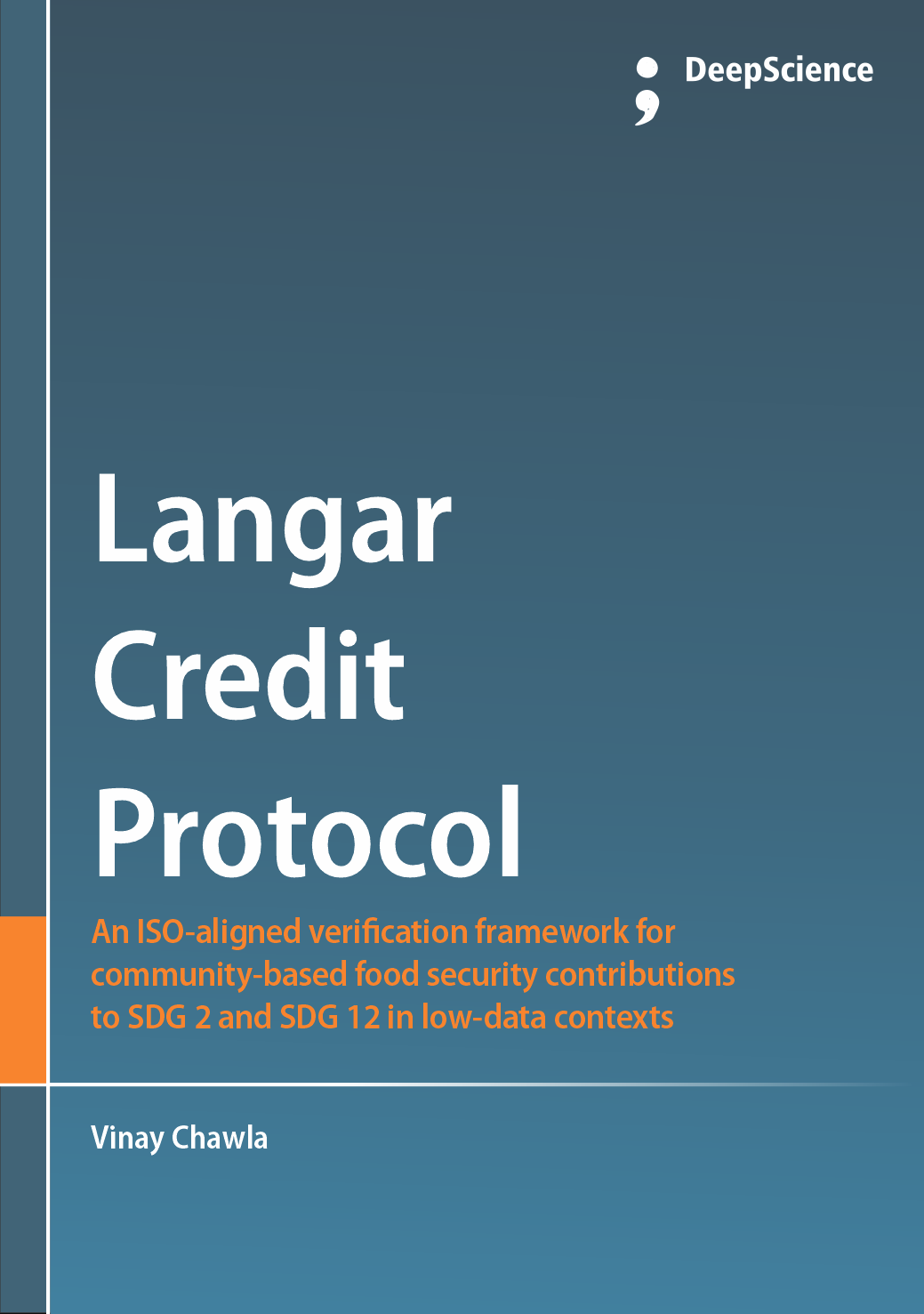
Langar Credit Protocol
##plugins.pubIds.doi.readerDisplayName##
https://doi.org/10.70593/978-93-7185-384-2
Keywords:
Sustainable Development Goals , SDGs, Zero Hunger, Responsible Consumption, Free Meals, Food SecuritySynopsis
Thousands of community kitchens in gurdwara langar, temple annadanam, sufi langar, and community centers across India serve free meals to millions of people annually. These community kitchens help reduce hunger and food waste. However, their contributions remain undetected in the official government data. When India reports progress on SDG 2 (Zero Hunger) and SDG 12 (Responsible Consumption), these community-based efforts are not counted, making it difficult for them to attract funding and gain recognition.
The Langar Credit Protocol was developed as a step-by-step verification system that allows community kitchens and community cafés (CKCC) to demonstrate their contributions in a credible and standardized manner. The protocol is based on three international quality standards (ISO 14064-3, ISO/IEC 17029, and ISO 20121) but is specifically adapted for volunteer-run operations with limited digital systems for data recording.
Six sustainability indicators were created against which community kitchens can be verified: the type of cooking fuel they use (clean energy like LPG or traditional wood), whether they use reusable plates or disposable ones, the nutritional quality of meals, where they source their ingredients, whether they cook fresh food or redistribute surplus, and how many meals they serve annually. Based on their performance, kitchens receive Silver, Gold or Platinum certification levels.
To make the verification process practical and affordable, a community-based verifier model called Langar Seva Verifiers was designed. These are trained local volunteers who complete a six-hour training program and conduct on-site verification of CKCC.
The Langar Credit Protocol provides community kitchens with a tool to demonstrate their impact using the same quality standards that international organizations trust. The NITI Aayog can include CKCC data in India's SDG progress reports. Corporate donors can identify reliable CKCC partnerships and report their contributions in annual sustainability reports.
This first edition of the protocol stands at an unusual intersection between centuries-old community traditions of langar and contemporary international MRV standards. By making the invisible visible, the CKCC hopes to obtain more recognition and resources while upholding human dignity and ensuring community-based food security.
References
Champions 12.3. (2025). SDG Target 12.3 on food loss and waste: progress report.
European Commission Joint Research Centre. (2024). Scientific brief: Sustainable food systems in low- and middle-income countries.
FAO. (2020a). Rethinking our food systems
FAO. (2020b). Sustainable food systems: Concept and framework.
FAO. (2021a). Food loss and waste measurement methodology: Executive summary.
FAO. (2021b). Methodology for Monitoring SDG Target 12.3.
FAO. (2025a). The state of food security and nutrition in the world 2025.
FAO.(2025b). Tracking progress on food and agriculture-related SDG indicators 2025
Downloads
Published
22 December 2025
Copyright (c) 2025 Vinay Chawla
Details about the available publication format: E-Book
E-Book
ISBN-13 (15)
978-93-7185-384-2
Details about the available publication format: Book (Paperback)
Book (Paperback)
ISBN-13 (15)
978-93-7185-501-3
How to Cite
Chawla, V. . (2025). Langar Credit Protocol. Deep Science Publishing. https://doi.org/10.70593/978-93-7185-384-2
Download Citation



 WhatsApp +91 7977171947