

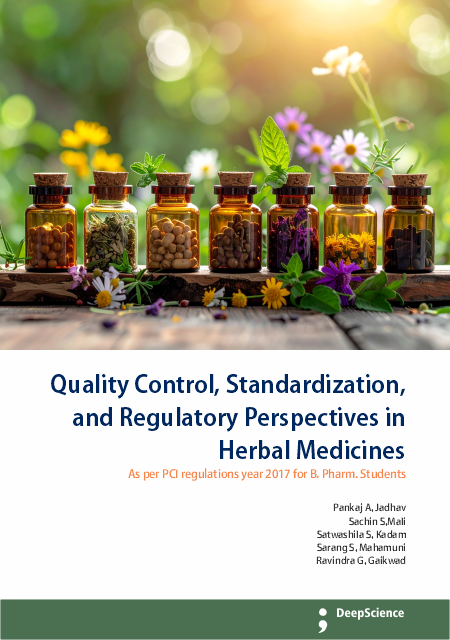
Quality Control, Standardization, and Regulatory Perspectives in Herbal Medicines
##plugins.pubIds.doi.readerDisplayName##
https://doi.org/10.70593/978-93-7185-631-7
Keywords:
Pharmaceutical substances, Medicinal plant, Dosage forms, WHO quality control guidelines, Herbal medicines, Herbal drugs, Safety evaluationSynopsis
Herbal remedies are at the forefront of health care around the world today and will continue to be, so long as there continues to be a growing demand for herbal-based drugs. As a result of this growth in demand, there needs to be greater adherence to quality control and standardization for herbal based products. In order to build trust among consumers and meet regulatory requirements, the effectiveness, safety and quality of herbal products need to be guaranteed. This book has been written to give students, researchers, and professionals alike a thorough understanding of the methods, guidelines and regulations that govern the assessment and standardization of herbal drugs. In addition to providing a comprehensive overview of the methods used for assessing and standardizing herbal drugs, the book provides an in-depth look at the International Standards for Quality Assurance in the Herbal Drug Industry, Current Good Manufacturing Practices (cGMP), Good Agricultural Practices (GAP), Good Manufacturing Practices (GMP), and Good Laboratory Practices (GLP). These practices are essential to ensuring quality in traditional medicine systems.
One of the primary focuses of the book is the regulatory framework for standardizing herbal drugs. This includes EU and ICH guidelines for the standardization of herbal drugs, as well as research protocols for evaluating the safety and efficacy of these drugs. In addition, the book provides an in-depth examination of the importance of stability testing for herbal drugs and how chromatographic techniques can be used for standardizing herbal drugs. The book also provides detailed information regarding the documentation required for new drug applications and export registrations.
In addition to the documentation process, the book emphasizes the importance of Pharmacovigilance and Regulatory Compliance. The book includes the World Health Organization's (WHO) guidelines on Safety Monitoring of Herbal Medicines. Finally, the book examines the differences between the herbal pharmacopeias of various countries and the use of chemical and biological markers for standardizing herbal drugs. This book was designed to be a reference source for students who are studying Pharmaceutical Sciences and for professionals working in the field of herbal drug research and development. With its unique blend of theoretical and practical knowledge, we believe the book will help to close the gap between traditional knowledge and modern scientific validation, thus contributing to the advancement of the standardization of herbal medicine.
We also hope this book will act as a guide for everyone involved in developing and regulating the production of herbal drugs to strive for excellence in quality.
Chapters
Downloads
Published
8 September 2025
Copyright (c) 2025 Pankaj A. Jadhav; Priyanka Avinash Patil, Geetanjali Nagesh Badak, Kanchan Bhimrao Ghatge, Madhuri Mahesh Desai, Monali Mukesh Upare, Snehal Mahadev Tavade, Vinod Rajendra Gaikwad, Supriya Suresh Shete, Rutuja Harischandra Jadhav, Ketaki Suhas Shinde, Kishori Chetan Hol, Kavita Dattajirao Patil, Tejashree Sourabh Khamkar; Sachin S. Mali , Satwashila S. Kadam , Sarang S. Mahamuni, Ravindra G. Gaikwad; Varda Sunil Joshi, Sandip A. Bandgar, Komal Sunil Pol, Pranil Babasaheb Toraskar, Aishwarya P. Bhosale, Pooja Sandeep Bhandare, Avdhut Pradip Jadhav, Smita V. Nhawkar
Details about the available publication format: E-Book
E-Book
ISBN-13 (15)
978-93-7185-631-7
Details about the available publication format: Book (Paperback)
Book (Paperback)
ISBN-13 (15)
978-93-7185-723-9
How to Cite
Jadhav, P. A. ., Mali , S. S., Kadam , S. S. ., Mahamuni, S. S. ., & Gaikwad, R. G. . (Eds.). (2025). Quality Control, Standardization, and Regulatory Perspectives in Herbal Medicines. Deep Science Publishing. https://doi.org/10.70593/978-93-7185-631-7
Download Citation








 WhatsApp +91 7977171947